
Picture a calm yard with leaves moving in a soft breeze. The scene may look safe, yet some trees can hide serious risks. Hazardous trees may have weak branches, deep cracks, damaged roots, or a lean that becomes dangerous during strong weather.
At Brothers Tree Service & Landscaping, we believe safety starts with clear warning signs. When you know what to look for, you can protect your home, your family, and nearby spaces before a tree problem becomes an emergency.
Common Hazardous Tree Signs To Notice Early
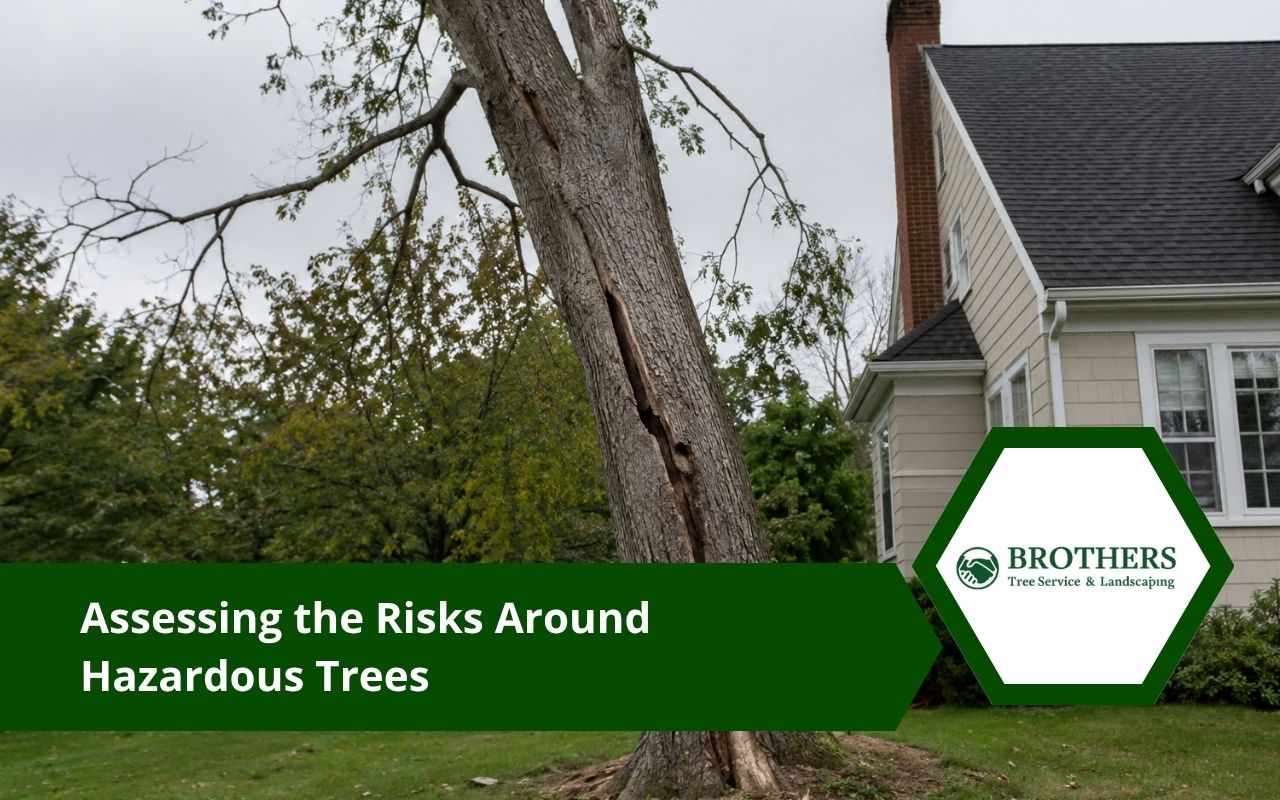
Cracks, splits, peeling bark, and open cavities can show that a tree is losing strength. Mushrooms or soft wood near the base may also point to decay inside the trunk. These hazardous tree signs should not be ignored, especially near walkways, roofs, driveways, or play areas.
Dead limbs are another warning sign. Branches that no longer grow leaves, break easily, or hang over busy areas can fall without much notice. After storms, it is wise to look for broken limbs, loose bark, and fresh splits.
- Deep cracks or long splits in the trunk
- Dead, hanging, or broken branches
- Fungal growth near the roots or base
- Loose bark, hollow areas, or open cavities
- Sudden leaning or lifted soil around the roots
Why Leaning Trees Can Become Serious Risks?
A slight lean can be normal, but a sudden change in angle is a clear concern. Leaning tree risks grow when roots are damaged, soil is weak, or the tree leans toward a house, fence, road, or power line.
Heavy rain, strong wind, or wet ground can push an unstable tree past its limit. Because of that, we recommend taking a new or growing lean seriously. A careful check can show whether the tree needs support, pruning, or removal.
Dangerous Branches And Hidden Tree Weakness
Dangerous tree branches can snap when they are dry, cracked, overloaded, or weakened by pests. Even a small limb can cause harm when it falls from a high place. Larger limbs can damage roofs, vehicles, fences, and outdoor areas.
Hazardous trees often show problems in the canopy before the trunk looks unsafe. Sparse leaves, dead tips, or uneven growth may mean the tree is under stress. Early action can reduce the chance of sudden branch failure.
- Branches hanging over roofs, cars, or walkways
- Large limbs with cracks near the trunk
- Dead branches that remain attached
- Branches touching power lines
- Heavy limbs with weak attachment points
Regular Inspections Help Prevent Tree Emergencies
Routine inspections help spot small issues before they become costly hazards. A tree may look healthy from a distance, yet still have weak roots, hidden decay, or limb damage. Checking trees every few months can make your property safer.
Our team at Brothers Tree Service & Landscaping guides property owners through early warning signs and safer next steps. For deeper safety guidance, review our tips on when to consider tree removal for safety.
Simple Checks You Can Do Safely
You can walk around the tree and look for cracks, exposed roots, pests, fungus, and broken limbs. Stay on the ground, and never climb a weak tree. A visual check after storms can help you notice new damage quickly.
You can also look for changes in the soil around the base. Raised ground, fresh gaps, or roots pulling upward may mean the tree is losing support. When something feels unsafe, it is better to stop and call for help with hazardous trees.
Professional Tree Hazard Assessment And Removal
A trained team can see risks that are easy to miss. With a tree hazard assessment service, we can review the trunk, canopy, roots, and surrounding area. This helps decide whether pruning, cabling, or hazardous tree removal is the safest choice.
With Brothers Tree Service & Landscaping, you get clear guidance before the work begins. When removal is needed, our team follows safe steps and proper methods. Learn more about careful tree removal and our tree removal services.
- We inspect the tree and nearby hazards
- We plan safe cutting and removal areas
- We use the right tools for controlled work
- We clear debris and review the site after service
Frequently Asked Questions
How do I know if a tree is hazardous?
A tree may be hazardous if it has deep cracks, dead branches, fungus near the base, exposed roots, or a sudden lean. These signs can point to weak structure or decay.
Can I remove dangerous branches myself?
Small branches near the ground may be simple to trim, but large or high branches are risky. For safer guidance, read our tree removal safety tips.
When is hazardous tree removal needed?
Removal may be needed when a tree is dead, badly leaning, cracked, hollow, or too close to people and structures. A professional inspection can confirm the safest option.
Do storms make hazardous trees worse?
Yes, strong wind, heavy rain, and wet soil can weaken roots and branches. After a storm, it is smart to check for new cracks, leaning, or fallen limbs.
Who should I contact about an unsafe tree?
When customers contact Brothers Tree Service & Landscaping, we explain the safest next step and review the risk with care. You can reach us through our contact page.
Safer Properties Start With Timely Action
Hazardous trees do not always fail without warning. Many show signs first, including cracks, decay, dead limbs, or a changing lean. When you act early, you reduce the risk of property damage and personal injury.
At Brothers Tree Service & Landscaping, we are ready to help you keep your outdoor space safer. A timely inspection, smart pruning, or careful removal can turn worry into confidence around the trees on your property.