
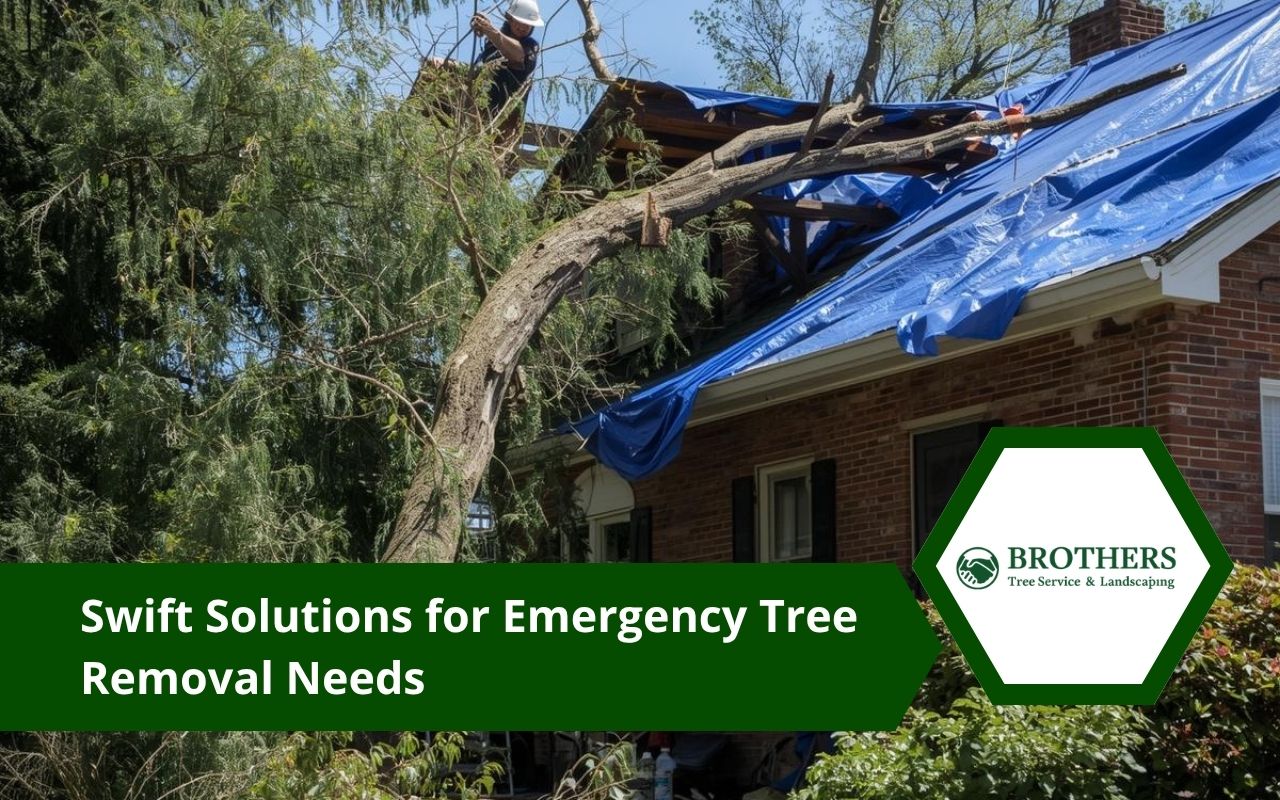
Storms can turn a strong, beautiful tree into a serious danger in minutes. When branches fall, trunks split, or roots lift, emergency tree removal becomes a safety step, not just a cleanup task.
At Brothers Tree Service & Landscaping, we help homeowners understand what to do after storm tree damage, how to stay safe, and when to call trained help for fast support.
Assess the Tree Hazard From a Safe Distance
First, keep your distance from the fallen area. A damaged tree can shift without warning, especially when it rests on a roof, fence, car, or power line. Look for hanging limbs, cracked trunks, lifted roots, and broken branches spread across the yard.
Take photos and videos only when it is safe. These records can help with insurance claims and give the crew a clear view of the problem before they arrive. For more storm planning guidance, review our tips on preparing for storms.
- Stay away from fallen wires and call the utility company right away.
- Keep children, pets, and neighbors out of the damaged area.
- Do not stand under broken limbs or leaning trunks.
- Check whether the tree is blocking a driveway, road, or entry point.
When Does Fallen Tree Removal Become Urgent?
Fallen tree removal becomes urgent when the tree creates a risk to people, homes, cars, or public spaces. A tree leaning against a roof, pressing on a wall, or blocking access should not be left in place. The longer it sits, the more damage it can cause.
Emergency tree removal is also important when bad weather is still moving through the area. Wind and rain can make a weak tree fall farther or cause nearby trees to fail. Brothers Tree Service & Landscaping treats these situations with care because quick action can prevent a larger problem.
Call Trained Tree Crews Before Cutting
Cutting a fallen tree may look simple, but it can be very risky. Pressure inside the wood can release suddenly, and heavy sections may roll, drop, or swing. That is why urgent tree cutting should be handled by trained workers with the right tools.
Before choosing a crew, ask about insurance, safety steps, and storm response experience. A clear team will explain the process, protect your property, and remove the tree in safe sections. You can also read our tree removal safety tips before making decisions.
- Choose a crew with proper insurance and field experience.
- Share photos of the tree, nearby structures, and access points.
- Ask how they will protect the lawn, driveway, and home.
- Confirm whether they handle debris removal after cutting.
Protect Your Home During Storm Tree Damage
Storm tree damage can affect more than the tree itself. Heavy branches can crack roofs, break windows, bend gutters, and harm nearby plants. A safe removal plan should protect the home while the crew cuts and lowers each section.
We may use ropes, careful cuts, or equipment to control movement and reduce impact. Brothers Tree Service & Landscaping also looks at nearby trees because one fallen tree can point to deeper issues in the yard, such as soft soil, decay, or weak roots.
Permits, Insurance, and Clear Documentation
Some areas may require permission before removing certain trees, even after a storm. Rules can depend on the tree size, location, and local property guidelines. When safety is at risk, the process may move faster, but it is still smart to document every step.
Contact your insurance company as soon as possible. Share photos, notes, and contractor details. Keep copies of estimates, invoices, and any messages about the claim. This can make the process easier if emergency tree removal is tied to home damage.
Cleanup and Yard Recovery After Removal
Once the tree is removed, the work is not always finished. Branches, logs, sawdust, and stump remains can make the yard unsafe or messy. A complete cleanup helps restore access, reduce pests, and make the space usable again.
After fallen tree removal, check the lawn, soil, and nearby plants for damage. If heavy equipment crossed the yard, some areas may need new soil, seed, or mulch. To lower future risks, use our guide on preparing trees for storms.
- Remove loose wood and debris from walkways and driveways.
- Fill holes left by roots, stump work, or heavy equipment.
- Watch for pests around leftover wood piles.
- Schedule tree checks before the next storm season.
Frequently Asked Questions
What should I do first after a tree falls?
Stay away from the tree and check for power lines, broken limbs, and blocked access. Then contact a trained tree crew for safe guidance.
Can I cut a fallen tree myself?
It is safer to avoid cutting a fallen tree on your own. Trapped pressure, hidden cracks, and heavy limbs can cause serious injuries.
Does insurance cover storm tree damage?
Coverage depends on your policy and the type of damage. Photos, videos, and contractor records can help support your claim.
How fast should emergency tree removal happen?
It should happen as soon as the tree creates a danger to people, structures, vehicles, roads, or access points.
Who should I contact for urgent tree cutting?
Contact an insured tree service with storm response experience. Brothers Tree Service & Landscaping can review the hazard and plan the safest next step.
Safer Tree Care Starts With Fast Action
A fallen or damaged tree can feel stressful, but the right steps make the situation easier to manage. Keep people away, document the damage, avoid cutting on your own, and call trained support before the risk grows.
Brothers Tree Service & Landscaping is here to help you protect your home after severe weather. For direct help with emergency tree removal or storm cleanup, contact our team today.