
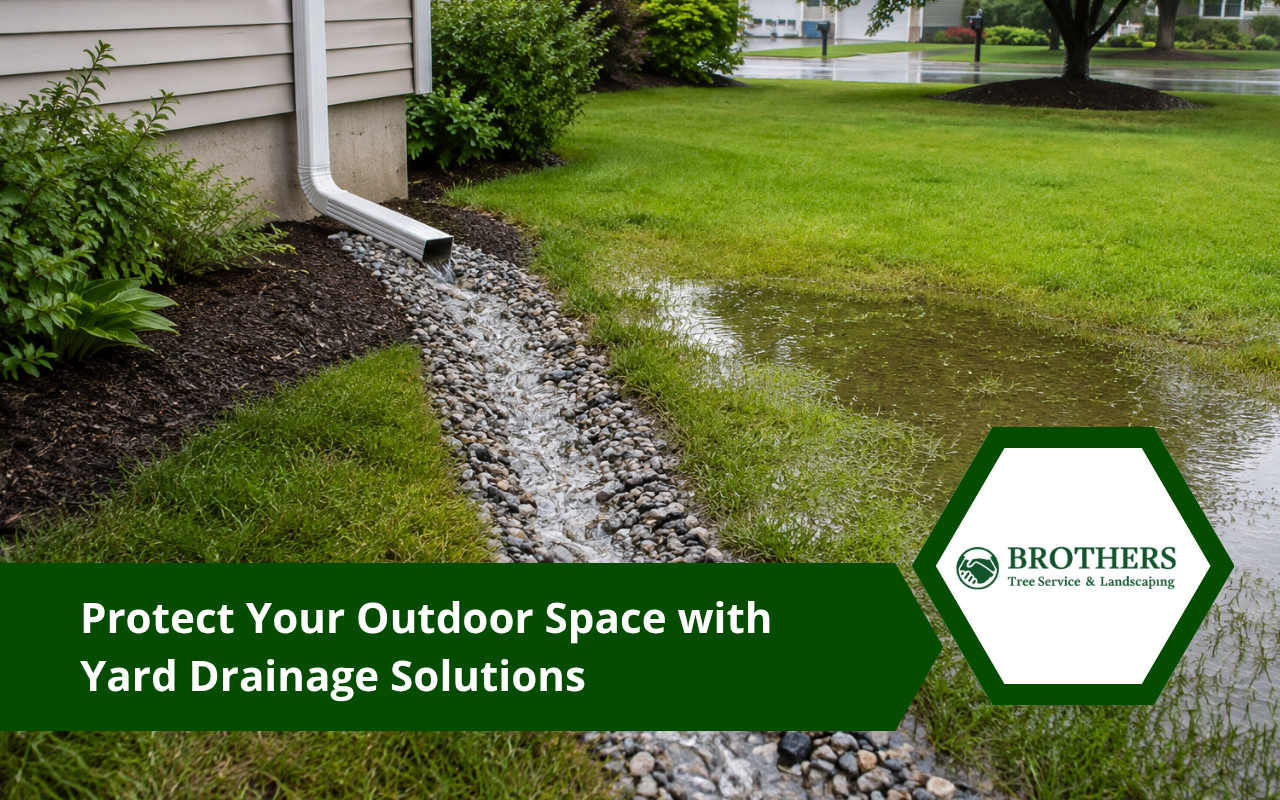
Water that stays in your lawn after rain can damage grass, weaken plants, and make outdoor areas hard to use. Effective yard drainage solutions guide excess water toward safer areas while protecting the soil, landscaping, and nearby structures.
At Brothers Tree Service & Landscaping, we look at how water moves across the entire property before considering possible improvements. Good drainage also supports healthier lawn care, so our essential lawn maintenance tips can help you protect the yard after wet areas are corrected.
Why Water Collects Across Your Property
Standing water often begins with low areas where rain naturally settles. Poor grading may direct runoff toward the house, patio, or planting beds instead of moving it away. Downspouts can also release large amounts of water into one small section of the lawn.
Soil conditions also affect drainage. Clay soil holds moisture for long periods, while compacted soil prevents water from soaking into the ground. Thick thatch, blocked drains, and nearby hard surfaces may make the problem worse by slowing absorption or increasing runoff.
Understanding the source is important because standing water solutions should address the cause, not only the visible puddle. Covering a wet area with new soil may offer temporary relief, but the water can return after the next period of heavy rain.
Warning Signs That Drainage Needs Attention
Drainage problems are not always limited to large puddles. Small changes in the lawn, soil, and plants may show that moisture is collecting below the surface. Early action can reduce erosion and help prevent wider damage.
- Puddles remain for more than a day after rainfall.
- The lawn feels soft, muddy, or spongy underfoot.
- Grass becomes thin, yellow, or difficult to mow.
- Mulch and soil wash away from planting beds.
- Water gathers near foundations, patios, or walkways.
- Plants decline even when they receive normal care.
Our team at Brothers Tree Service & Landscaping can help homeowners examine these signs as part of a wider landscaping plan. The right response depends on where the water begins, where it travels, and where it can safely discharge.
Which Yard Drainage Solution Fits Your Property?
Every property handles water differently. A small low spot may need a simple landscape adjustment, while repeated flooding may require a more complete yard drainage service. The best option should match the soil, slope, water volume, and surrounding features.
- French drains: Collect water below the surface and move it through a perforated pipe.
- Regrading: Reshapes the ground so runoff travels away from buildings and wet areas.
- Dry wells: Hold water underground and allow it to enter the surrounding soil slowly.
- Surface drains: Capture water in low areas before it spreads across the lawn.
- Downspout extensions: Carry roof runoff farther from foundations and planting beds.
Some soggy yard fixes work best when combined. For example, grading may guide water toward a drain, while a pipe carries it to a suitable outlet. A careful property review can prevent one improvement from creating a new problem elsewhere.
French Drains for Subsurface Water Control
A French drain uses a gravel-filled trench and perforated pipe to collect moisture below the surface. It can be useful along low sections of a lawn, beside retaining areas, or near places where water moves slowly through heavy soil.
The trench must have a steady slope toward a safe discharge point. Landscape fabric helps separate the gravel from surrounding soil, while the perforated pipe creates a clear route for water. Poor placement or an incorrect slope may reduce performance.
With Brothers Tree Service & Landscaping, homeowners receive landscaping drainage help that considers nearby trees, planting beds, and outdoor features. This broader view matters because trenching and redirected water can affect roots, soil stability, and future landscape plans.
Grading and Soil Improvements That Reduce Pooling
Grading changes the shape of the ground so water moves away from structures and toward a planned drainage area. Even a gentle slope can influence how runoff travels during a storm. Regrading may be useful when water repeatedly flows toward a foundation or settles across a wide lawn.
Soil improvements may also support drainage for landscaping. Organic matter can improve soil structure, while aeration may reduce surface compaction in suitable areas. However, soil amendments alone may not solve a major slope or runoff problem.
When you choose Brothers Tree Service & Landscaping, we consider how grading may affect lawn use, planting areas, and neighboring sections of the property. Water should be redirected responsibly rather than pushed toward another building or nearby yard.
Landscape Features That Manage Rainwater Naturally
Some drainage improvements can become useful parts of the landscape. These features slow runoff, increase absorption, and reduce pressure on pipes or surface drains. They may also improve the appearance and function of wet areas.
- Rain gardens: Shallow planted areas that collect runoff and allow gradual absorption.
- Native plants: Plants suited to local conditions that may handle changing moisture levels.
- Permeable paths: Gravel or spaced pavers that allow water to pass through the surface.
- Swales: Gentle channels that guide water toward a safer part of the property.
- Groundcover: Low plants that help protect exposed soil from erosion.
These options should follow the natural movement of water. They are not replacements for every drainage system, but they can support larger improvements and create a more balanced outdoor space.
Frequently Asked Questions
How long should water remain in a yard after rain?
Small wet areas may disappear as the soil absorbs moisture. Puddles that remain for more than a day may suggest compacted soil, poor grading, or another drainage concern. Our practical yard improvement tips explain other ways to observe and improve outdoor conditions.
Can landscaping solve a soggy yard?
Landscaping can improve some wet areas through grading, planting, swales, or permeable materials. Larger water problems may also need drains or underground piping. Our landscaping services in Belfair show how drainage can fit within a wider property plan.
Are French drains suitable for every property?
No. French drains need a suitable route and discharge point. They may not work well when the slope is incorrect or when there is nowhere safe for collected water to go. A property assessment can identify whether another method would be more effective.
How can I maintain a yard drainage system?
Keep surface openings, gutters, and downspouts clear of leaves and debris. Check the yard after strong rainfall for new pooling, erosion, or slow drainage. For further guidance, use our lawn maintenance guidance to support healthy grass and soil.
When should I request professional drainage help?
Consider professional help when water repeatedly gathers near buildings, covers large lawn areas, causes erosion, or returns after basic fixes. A yard drainage service can review the full water path and recommend improvements that fit the property.
Plan a Drier and More Usable Yard
Reliable yard drainage solutions begin with understanding the source of the water. French drains, grading, dry wells, surface drains, and landscape features may each play a role. The right plan protects the lawn while keeping outdoor areas easier to maintain and enjoy.
At Brothers Tree Service & Landscaping, we approach drainage as part of the complete outdoor environment. To discuss persistent pooling, muddy areas, or runoff near your landscaping, contact our team about your yard drainage needs.