
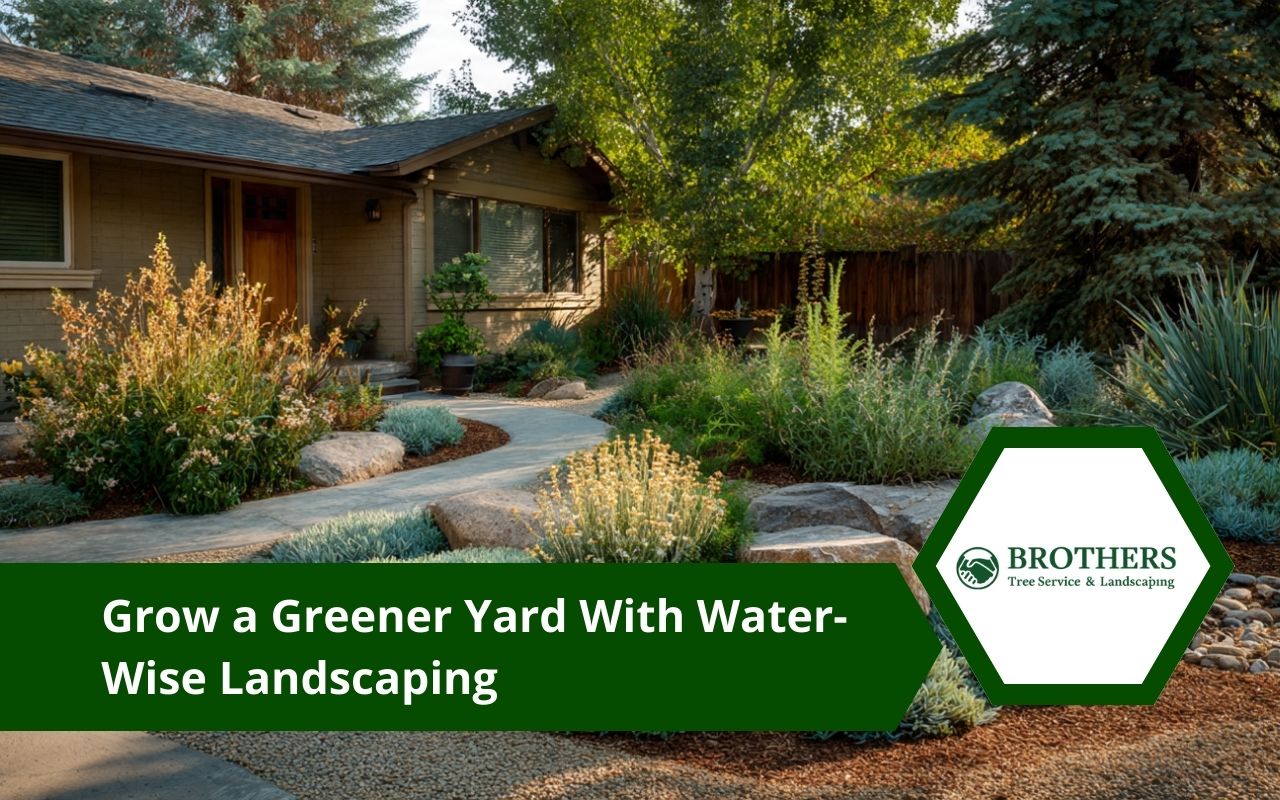
Consider stepping into your backyard and seeing a garden that thrives with minimal water. In today’s world, water conservation matters more than ever. With Water-Wise Landscaping, you can shape a sustainable space that looks beautiful and supports the environment.
This approach focuses on plants that need less water. It also includes features like rain gardens, so every drop works harder. As a result, your yard can stay lush, even during dry spells.
What Water-Wise Landscaping Means Today
Water-Wise Landscaping is about designing a yard that uses less water without losing curb appeal. Instead of fighting your local climate, you work with it. Therefore, you choose smarter plants, better soil care, and efficient watering methods.
In addition, this style reduces runoff and helps your landscape handle heat. Over time, it can lower maintenance while keeping your outdoor space vibrant.
- Use plants suited to your region
- Improve soil so it holds moisture longer
- Water with methods that reduce waste
- Replace high-water lawn areas with targeted planting zones
Choose Plants That Need Less Water
Start by evaluating your yard’s conditions, such as soil type, sun exposure, and typical rainfall. Then group plants with similar needs together, which makes watering more efficient. This simple step supports Water-Wise Landscaping because it prevents overwatering and reduces stress on plants.
Also, treat shady corners, sunny slopes, and flat areas as separate zones. That way, each spot gets plants that naturally fit the conditions.
- Deep-rooted perennials for long-term resilience
- Low-growing groundcovers to protect soil from drying
- Hardy shrubs for structure and texture
- Native grasses to add movement with less water
Plant Layers That Hold Moisture Longer
Create a layered look with groundcovers, mid-height flowers, and taller shrubs. For example, creeping thyme or sedum can shield soil from heat. Meanwhile, lavender, Russian sage, and ornamental grasses add color and form with limited moisture.
As a result, your garden can stay attractive while demanding less watering and fewer schedule changes.
Build a Simple Plan for Drought-Tolerant Design
Drought-tolerant design works best when you plan where water should go first. Divide your yard into hydrozones, placing higher-need plants closer to your home or water source. Then place low-water plants farther out. This supports Drought-tolerant design and helps reduce waste.
In addition, use gravel paths, mulch beds, and decorative stone to cover bare soil. That way, moisture stays in the ground longer.
- Create hydrozones based on water needs
- Use mulch and stone to reduce evaporation
- Add focal points like boulders or logs
- Mix textures with succulents and grasses
Rain Garden Basics for Better Water Control
A rain garden is a shallow low spot that captures runoff from roofs, patios, or driveways. With Rain garden basics, you turn stormwater into a useful resource. First, shape a gentle basin and add well-draining soil mixed with compost. Then rainwater can soak in slowly instead of rushing away.
For best results, place the rain garden at least ten feet from your home’s foundation. As a result, you can reduce erosion while keeping nearby planting beds hydrated.
Plants That Handle Wet and Dry Cycles
Choose moisture-tolerant plants that can handle short flooding and dry periods. A mix of grasses, sedges, and flowering perennials works well. Native choices such as blue flag iris or swamp milkweed can add color while supporting local wildlife.
In other words, a rain garden can become both practical and beautiful.
Use Native Plants to Lower Water Needs
Native plants are adapted to local conditions, so they often need less extra watering. Therefore, they can be a strong foundation for Water-Wise Landscaping. They also support pollinators and beneficial insects, which strengthens your yard’s natural balance.
In addition, a diverse mix of natives can reduce the need for fertilizers and pesticides over time.
- For wetter areas: Joe-Pye weed, swamp milkweed
- For drier areas: purple coneflower, black-eyed Susan
- For structure: native shrubs and prairie grasses
- For seasonal interest: mixed bloom times and textures
Water Smarter With Efficient Irrigation
Efficient watering is essential to Water-Wise Landscaping because it delivers moisture where plants need it most. Drip irrigation is a strong option since it releases water slowly at the root zone. This reduces evaporation and runoff, so you waste less water.
Additionally, place drip lines under mulch and use a timer for consistent results. If you add soil sensors, the system can pause after rainfall and adjust during heat.
Mulching Helps Your Soil Stay Moist
Mulch acts like a protective blanket for your soil. It retains moisture, reduces weeds, and keeps temperatures steadier. Apply two to three inches of wood chips, shredded bark, or compost around plants, leaving a small gap near stems to prevent rot.
Over time, mulch improves soil quality as it breaks down. As a result, your yard can stay healthier with less watering.
Create Hardscapes That Support Water Savings
Hardscapes can help you reduce runoff and cut back on thirsty lawn areas. Use permeable surfaces like gravel, decomposed granite, or permeable pavers. These materials allow water to soak into the ground, which supports Water-Wise Landscaping goals.
Also, arrange paths and patios so rain flows toward planting beds. That way, water moves to roots instead of leaving your yard.
- Gravel pathways that drain quickly
- Permeable pavers for patios and walkways
- Seating areas under light shade
- Planter boxes to soften edges and guide water
Maintenance Tips That Keep Your Yard Thriving
Check your irrigation system often to catch leaks or clogs early. Clean drip emitters, replace damaged lines, and remove debris. Also, prune lightly to improve airflow and encourage deeper roots. Since weeds compete for moisture, keep beds tidy and well-mulched.
Adjust care by season. For example, water early in summer mornings to reduce evaporation. Then reduce irrigation in fall as temperatures cool.
Frequently Asked Questions
1) What is Water-Wise Landscaping in simple terms?
It is a way to design and care for your yard using less water. It relies on smart plant choices, better soil care, and efficient watering methods.
2) How do I start a drought-tolerant design plan?
Begin by zoning your yard by water needs. Place higher-need plants near a water source. Then use low-water plants and mulch in outer zones.
3) What are the essentials of rain garden basics?
You need a shallow basin in a low spot, well-draining soil, and plants that handle wet and dry cycles. Also, keep it at least ten feet from your home.
4) Do native plants always use less water?
Often they do, since they fit local weather patterns. However, new plantings still need water until roots establish.
5) What is the best irrigation option for water savings?
Drip irrigation is a strong choice because it delivers water directly to roots. Timers and soil sensors can further reduce waste.
Explore More Water-Saving Ideas With Brothers Tree Service & Landscaping
If you want more plant inspiration, explore ideas for front-yard color with low water needs. For example, see our guide on
drought-tolerant flowers for your front yard.
Also, if you are planning a bigger upgrade, review these
sustainable landscaping ideas
to shape a yard that looks great and uses resources wisely.
When you are ready to talk through your yard goals, reach out to Brothers Tree Service & Landscaping through our
contact page.
That way, you can get guidance that fits your space and local conditions.