
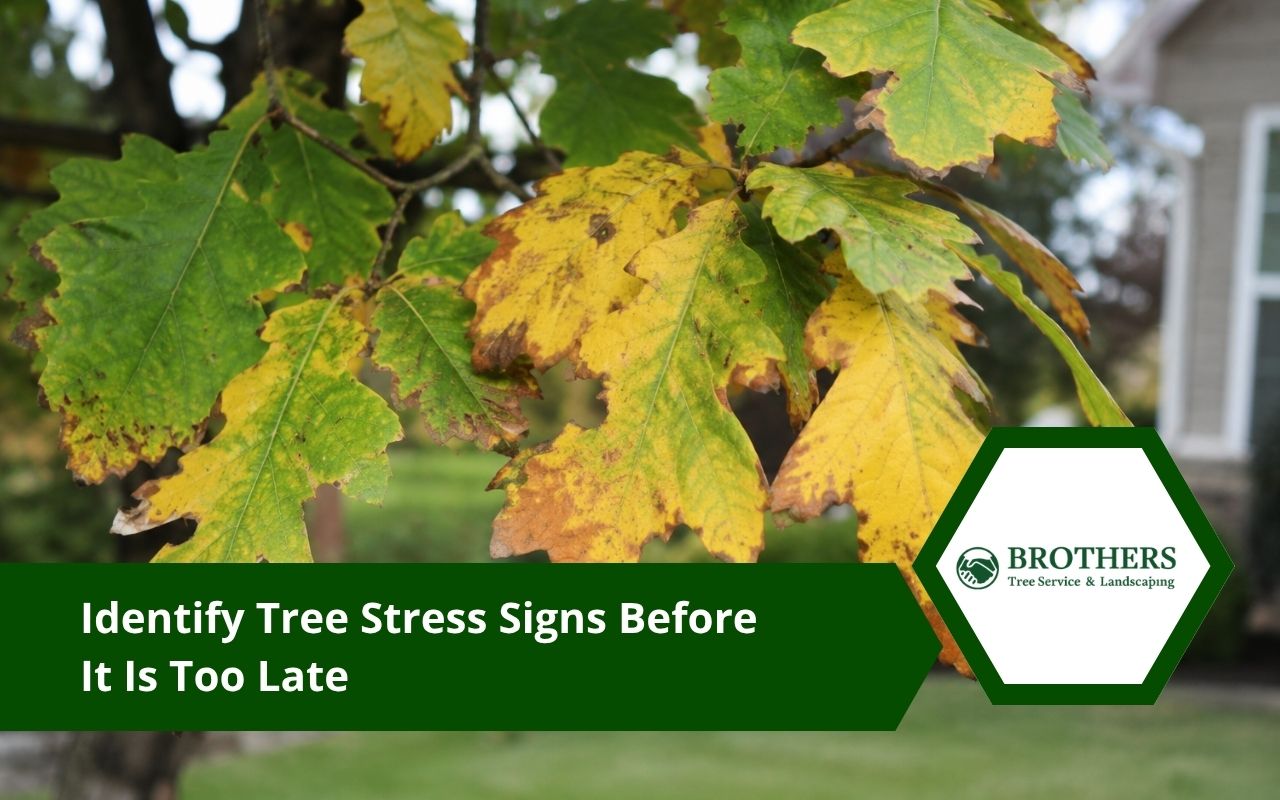
Trees can look strong on the outside while struggling quietly beneath the surface. When you notice tree stress signs early, you can protect your yard before small issues turn into serious damage.
At Brothers Tree Service & Landscaping, we help homeowners understand what their trees are showing through leaves, bark, soil, and growth changes. With the right care, many stressed trees can recover and stay healthy for years.
Common Causes Behind Stressed Trees
Trees face stress when their roots, leaves, or trunk cannot get what they need. Sudden weather changes, poor soil, pests, and limited root space can all weaken a tree over time.
In neighborhoods, sidewalks, driveways, and compacted ground can make it harder for roots to take in water and air. For more support with basic care, our tree care guide and tips can help you build better habits.
Leaf and Bark Changes That Need Attention
Leaves and bark often show the first visible tree stress signs. Early changes may seem small, but they can point to deeper problems with water, pests, disease, or soil.
- Yellow, brown, or pale leaves outside the normal season
- Scorched edges on heat stressed trees
- Curling, wilting, or early leaf drop
- Cracked, peeling, or dark patches on bark
- Small holes, sticky sap, or sawdust near the trunk
Leaf discoloration signs should not be ignored, especially when they appear across several branches. These changes may mean the tree needs water, better soil, pest control, or expert care.
Why Do Trees Show Stress During Harsh Weather?
Extreme heat, long dry periods, strong wind, and sudden frost can all place pressure on a tree. Heat stressed trees lose moisture quickly, especially when the soil is already dry.
Drought stressed trees may wilt, drop leaves early, or stop growing new branches. To plan better seasonal care, visit our seasonal tree care resource.
Watering Habits That Support Tree Recovery
Water helps trees move nutrients, cool their leaves, and grow strong roots. However, both too little water and too much water can create problems.
- Water slowly so moisture reaches deep roots
- Check soil before watering again
- Use mulch to help hold moisture
- Keep mulch away from the trunk
- Avoid watering so often that soil stays soggy
Drought stressed trees often need deep watering during dry weeks. With Brothers Tree Service & Landscaping, you get clear guidance on whether watering alone is enough or whether your tree needs more support.
Healthy Soil Creates Stronger Root Systems
Soil gives roots the air, water, and nutrients they need. When soil is too hard, too sandy, or low in nutrients, trees may weaken even when they look fine at first.
Adding compost, reducing foot traffic, and protecting the root zone can improve tree health over time. Our guide to tree health benefits explains why healthy trees matter for your whole property.
Pests, Disease, and Pruning Warning Signs
Pests and disease can make stress worse when a tree is already weak. Regular checks help you catch problems before they spread to larger branches or nearby trees.
- Look for insects, holes, sticky sap, or fungus
- Remove dead or broken branches when safe
- Clean tools before moving between trees
- Avoid heavy pruning during stressful weather
- Call for help when branches hang over structures
A trusted tree care service can inspect the full tree, not only the parts that are easy to see. Our team at Brothers Tree Service & Landscaping checks each concern carefully so you can choose safer next steps.
Frequently Asked Questions
What are the most common tree stress signs?
The most common signs include wilting leaves, early leaf drop, bark cracks, weak growth, dead branches, and leaf discoloration signs during the wrong season.
Can heat stressed trees recover?
Many heat stressed trees can recover with deep watering, mulch, and reduced stress around the roots. Fast action gives the tree a better chance.
How can I help drought stressed trees?
Water deeply, protect the soil with mulch, and avoid cutting healthy branches during dry periods. A professional tree assessment can confirm the best care plan.
When should I call for expert tree help?
Call when you see major branch dieback, trunk cracks, root damage, fungus near the base, or sudden changes that spread quickly.
Does tree care improve property safety?
Yes. Healthy trees are less likely to drop weak limbs or decline without warning, which helps protect your home, yard, and family.
Get Expert Support for Healthier Trees
Small changes can protect your trees when you act early. Still, some problems need trained eyes, safe tools, and a clear care plan.
At Brothers Tree Service & Landscaping, we can provide a professional tree assessment and guide you toward the right solution. To protect your landscape, contact our team or learn more about the benefits of professional tree service.