
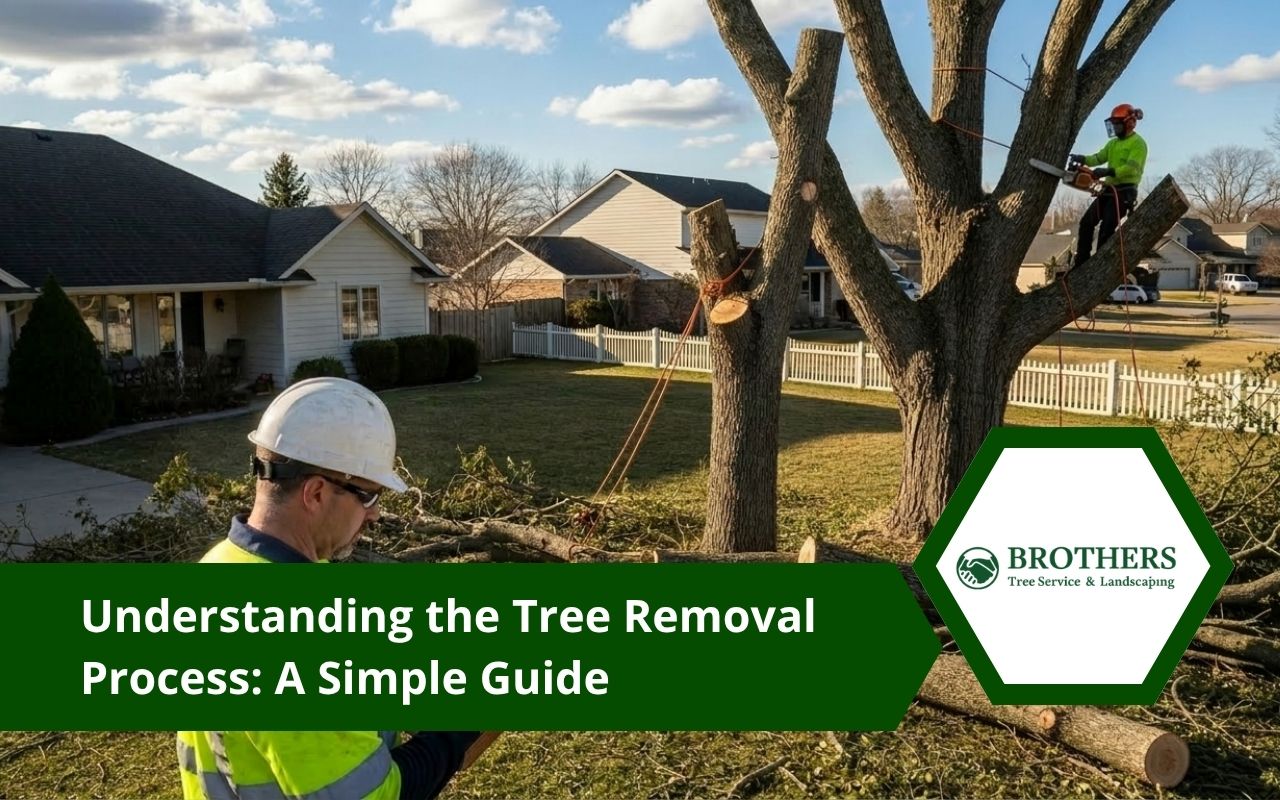
Every yard has trees that add shade, beauty, and comfort. However, some trees can become unsafe because of disease, storm damage, weak roots, or poor placement near homes and walkways.
Knowing the tree removal process helps you feel prepared before work begins. At Brothers Tree Service & Landscaping, we focus on safe planning, careful cutting, and clean results that protect your property and keep your landscape balanced.
Start With A Careful Tree Inspection
Before any cutting starts, the tree should be checked from the roots to the highest branches. Dead limbs, peeling bark, fungus, cracks, and leaning can all show that the tree may no longer be safe.
The area around the tree also matters. Nearby roofs, fences, power lines, driveways, and walkways can change the safest plan. A clear inspection helps decide whether pruning, support, or full removal is the best choice.
- Look for dead, broken, or hanging branches.
- Check the base for fungus, soft wood, or open cracks.
- Watch for raised soil, exposed roots, or cracked pavement.
- Review how close the tree is to your home or utilities.
When Should A Tree Be Removed?
A tree may need removal when it creates a real safety risk or when damage is too severe to fix. Large cracks, hollow areas, major decay, or heavy leaning can make the tree unstable.
Removal may also be needed when roots damage hard surfaces or grow too close to a foundation. In these cases, the tree removal process protects your home while making room for safer landscape choices.
Professional Planning Makes Removal Safer
Safe removal depends on a clear plan. Our team reviews access points, drop zones, nearby structures, and cleanup needs before the work begins. This helps reduce risks and keeps the job organized.
Brothers Tree Service & Landscaping also helps homeowners understand how trees are removed in sections when space is limited. For larger trees, careful planning can prevent damage to lawns, gardens, and nearby outdoor features.
For more details about large tree safety, you can read our guide on how to safely remove large trees.
Permits And Property Rules Come First
Some cities, neighborhoods, or homeowner groups require approval before a tree can be removed. These rules may depend on tree size, species, location, or local protection standards.
Checking these details early can help avoid delays. It also gives you a clearer tree removal timeline, especially when forms, inspections, or written approvals are needed before the project starts.
Equipment Used For Safe Tree Work
The right equipment helps each part of the job move safely. Depending on the tree, the crew may use chainsaws, ropes, harnesses, pole saws, chippers, stump grinders, bucket trucks, or cranes.
Protective gear is just as important. Helmets, gloves, eye protection, ear protection, and strong boots help workers stay safe while completing each step with care.
- Chainsaws and pruning tools help cut branches and trunk sections.
- Ropes and rigging tools guide heavy limbs to the ground.
- Wood chippers turn branches into useful mulch.
- Stump grinders help clear the base after removal.
You can learn more about the tools used during tree work in our article on essential equipment for tree removal.
Tree Cutting Steps From Start To Finish
The tree cutting steps depend on the tree size, shape, and location. In open areas, a tree may be guided down in one direction. In tighter spaces, it is usually taken apart in smaller sections.
Crews often begin by removing smaller branches, then larger limbs, and finally trunk sections. This controlled approach is a key part of how trees are removed near homes, fences, and other valuable areas.
Brothers Tree Service & Landscaping uses a careful method for each property because no two trees are exactly alike. You can also explore our guide on large tree removal methods.
Frequently Asked Questions
How long does tree removal usually take?
Most small or medium trees can often be removed in one day. Larger trees, tight spaces, storm damage, or permit needs can extend the tree removal timeline.
Can a tree be removed without hurting my yard?
Yes, careful planning can reduce yard damage. We use safe access routes, controlled cutting, and proper cleanup methods to protect the surrounding space as much as possible.
What happens to the stump after removal?
The stump can be ground below the soil level or left in place if you prefer. Stump grinding creates a smoother area for grass, plants, or future landscape work.
Do I need to be home during the work?
It is helpful, but not always required. Before work begins, we confirm access, safety concerns, and the final plan so the project can move forward smoothly.
How do I schedule help with tree removal?
You can contact Brothers Tree Service & Landscaping through our contact page to discuss your tree, property needs, and next steps.
Restore Your Yard After Tree Removal
After the tree is gone, the area may need soil, grading, seed, sod, mulch, or new plants. This final stage helps the space look clean and blend with the rest of your yard.
Brothers Tree Service & Landscaping believes the job should not end with cutting alone. With proper cleanup and simple aftercare, your landscape can feel open, safe, and ready for healthy new growth.
- Remove leftover roots, wood chips, and loose debris.
- Add fresh soil where the tree once stood.
- Plant grass, shrubs, or a smaller tree when the site is ready.
- Water new plants often until they are well settled.
A well-managed tree removal process gives your property a safer layout and a cleaner look. With the right team, each step feels clear, careful, and focused on long-term landscape health.