
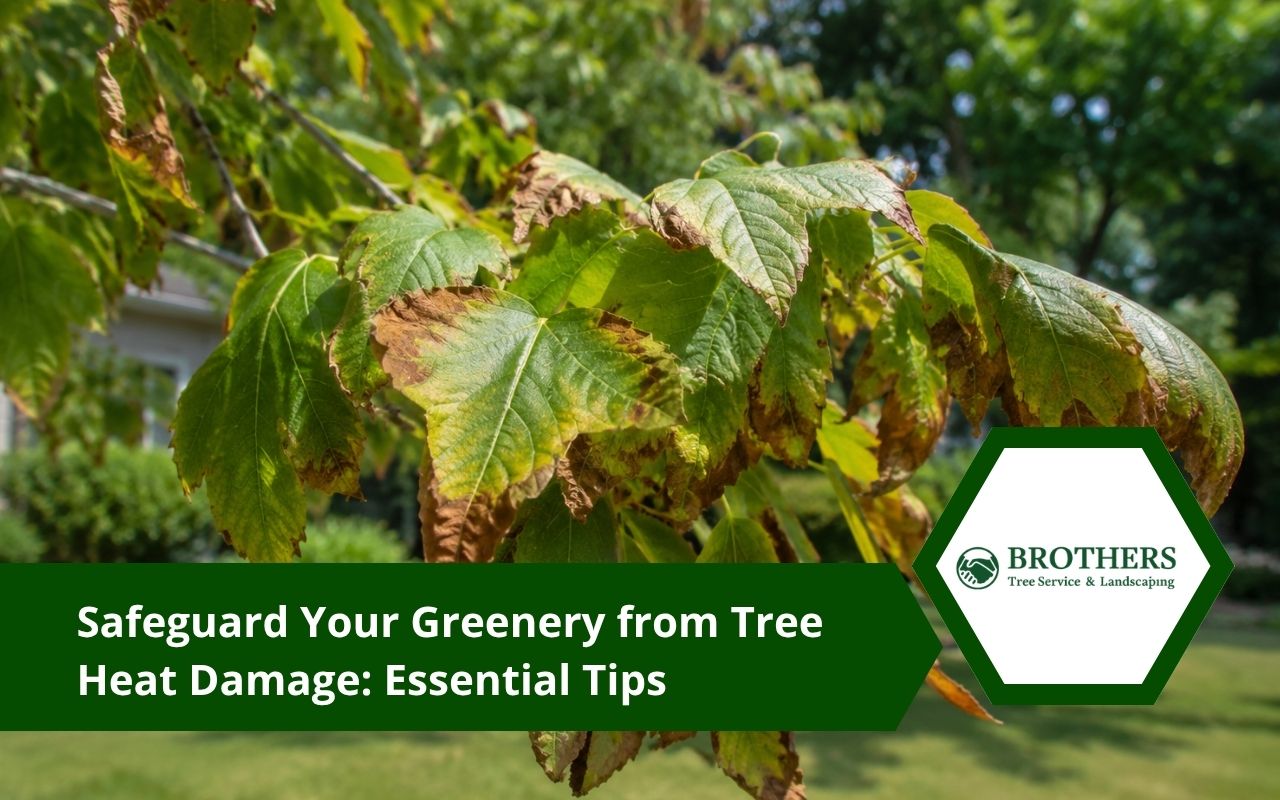
Summer heat can be hard on trees, even when they look strong from a distance. At Brothers Tree Service & Landscaping, we help you notice stress early and protect your yard with simple steps that support long-term tree health.
Tree heat damage can show up through dry leaves, weak branches, bark cracks, and slow growth. With steady care, better watering, and timely checks, you can help your trees stay safer through hot weather.
Understanding How Summer Heat Hurts Trees
Tree heat damage happens when high temperatures make a tree lose water faster than its roots can replace it. Leaves may dry out, bark may split, and roots may struggle in hot, compacted soil. This stress can reduce the tree’s ability to make food and stay strong.
Long periods of heat may also lead to summer tree decline. A tree may grow less, drop leaves early, or show thin spots in the canopy. These signs do not always mean the tree is lost, but they do mean it needs attention before the damage spreads.
How Can You Spot Heat Stress Early?
Early signs are often visible in the leaves, bark, and overall shape of the tree. At Brothers Tree Service & Landscaping, we look for changes that may seem small at first but can point to deeper stress.
- Scorched tree leaves with brown edges or dry tips
- Leaves that curl, wilt, or drop before fall
- Heat damaged bark with cracks, peeling, or dry patches
- Branches with fewer leaves than nearby healthy limbs
- Soil that feels dry several inches below the surface
Check trees in the morning and evening during heat waves. Leaves that stay wilted overnight may need extra care. Bark changes should also be watched closely because open cracks can invite pests and disease.
Watering Methods That Support Strong Roots
Good watering is one of the most helpful ways to reduce tree heat damage. Deep watering helps roots grow lower into cooler soil, where moisture lasts longer. Light surface watering may feel useful, but it often does not reach the roots that need it most.
- Water slowly so moisture reaches deep into the soil
- Focus water near the root zone, not directly on the trunk
- Water early in the morning to reduce evaporation
- Check soil moisture before adding more water
- Adjust watering after rain or during long dry periods
You can use our tree care guide and tips to plan simple habits that support healthier roots. Healthy roots help trees handle heat with less stress.
Mulch, Shade, and Soil Protection
Mulch helps keep soil cooler and holds moisture near the roots. Use organic mulch such as wood chips or shredded bark. Keep it a few inches away from the trunk so the bark can breathe and stay dry.
Shade can also protect young or sensitive trees. Temporary shade cloth may help during the hottest part of the day. For broader yard care, our seasonal yard tips can help you plan around heat, rain, and changing outdoor needs.
Pruning Choices That Reduce Extra Stress
Pruning can help a tree use energy better, but heavy cutting during hot weather can create more stress. Remove dead or broken branches when needed, but avoid large cuts during extreme heat unless safety is a concern.
- Remove dead limbs that may attract pests
- Thin crowded areas only when it benefits airflow
- Avoid cutting too much live growth in summer
- Make clean cuts near the correct branch area
- Ask for help when damage is high in the canopy
With Brothers Tree Service & Landscaping, you can get practical support when pruning decisions are not clear. Careful trimming helps reduce risk without exposing healthy parts of the tree to too much sun.
When Professional Tree Support Makes Sense
Some symptoms need a closer look. A tree inspection service can help find pests, disease, weak branches, or root problems that may be making heat stress worse. This is useful when leaves keep browning, bark keeps cracking, or the canopy looks thinner each week.
A tree care service may also help with soil support, safer pruning, and recovery planning. At Brothers Tree Service & Landscaping, we focus on what the tree needs now and what can help it stay stronger through future heat.
Frequently Asked Questions
Can scorched tree leaves turn green again?
Scorched areas usually do not turn green again, but healthy parts of the tree may keep growing. Good watering, mulch, and regular care can support recovery. For more help, review these tree health benefits.
Is heat damaged bark always a serious problem?
Heat damaged bark can be serious when cracks are deep, spreading, or attracting insects. Small dry patches may improve with better care, but open bark wounds should be checked before pests or disease move in.
How often should I water trees in summer?
Most trees do better with deep watering instead of quick daily watering. The right schedule depends on tree age, soil type, and weather. This tree care guide can help you plan a better routine.
What causes summer tree decline?
Summer tree decline may come from heat, dry soil, compacted roots, pests, or past damage. Several small problems can build up over time, so it helps to watch changes in leaves, bark, and branch growth.
When should I schedule a tree inspection service?
Schedule a tree inspection service when leaf scorch spreads, bark cracks deepen, branches die back, or a tree looks weaker after heat waves. You can also use these seasonal yard tips to know what to watch for.
Protect Your Trees Through Every Hot Season
Tree heat damage is easier to manage when you act early. Watch for dry leaves, weak bark, thin growth, and soil that stays too dry. Steady watering, mulch, light shade, and careful pruning can make a clear difference during hot months.
When you choose Brothers Tree Service & Landscaping, we help you care for trees with practical steps that fit your yard. To discuss heat stress, tree care needs, or a closer inspection, contact our team before summer stress gets worse.