
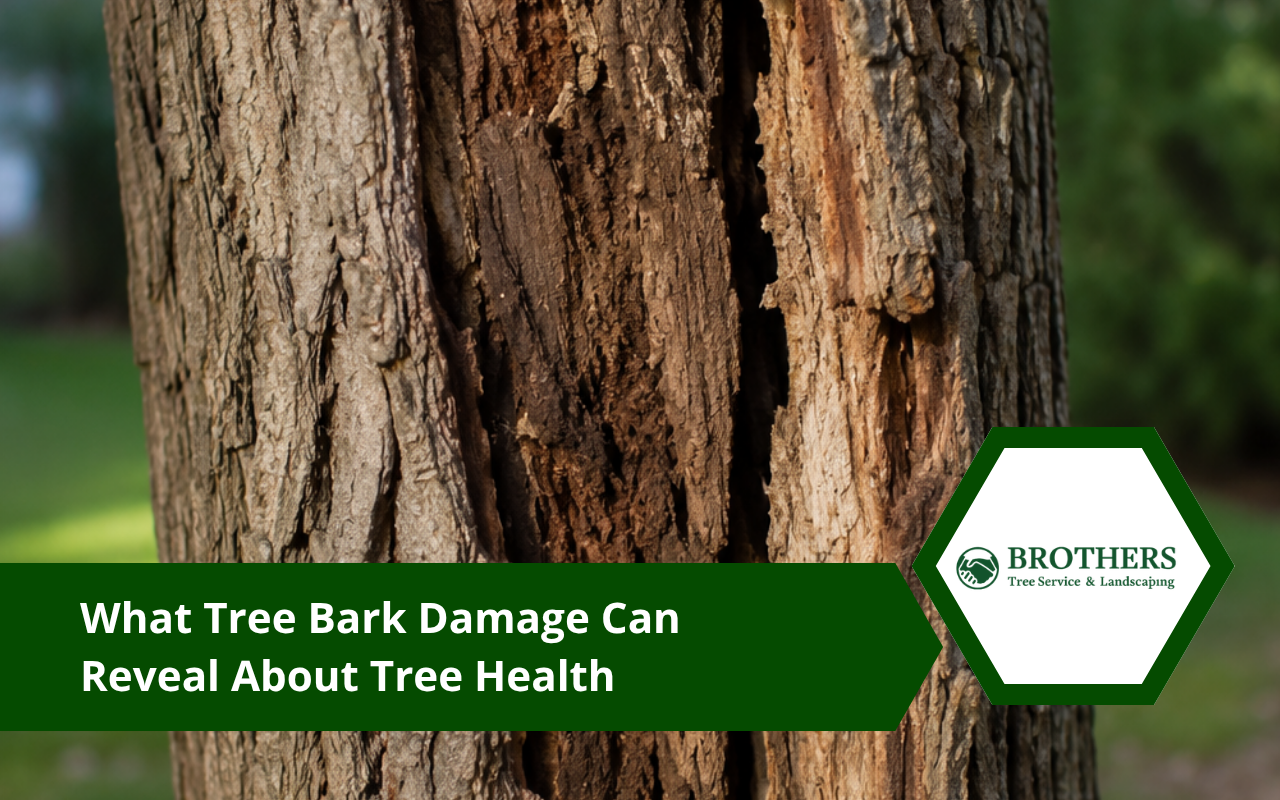
Changes in a tree’s bark can reveal stress, injury, pests, disease, or normal growth. Learning what to observe can help you decide whether a tree needs simple monitoring or professional attention.
At Brothers Tree Service & Landscaping, we encourage property owners to understand the connection between bark condition and overall tree health.
Not every crack or loose piece of bark signals a serious problem. However, tree bark damage that spreads, exposes wood, attracts insects, or appears with dying branches deserves a closer look.
Understand What Bark Changes Can Reveal
Bark protects the living tissue that moves water and nutrients through a tree. When this outer layer changes, the cause may be physical injury, weather stress, disease, insect activity, or natural shedding.
The location, size, color, and progression of the affected area can provide useful clues. A small surface change may be less concerning when the canopy remains healthy.
The same change may need attention when it appears beside dead limbs, fungal growth, cankers, exposed wood, or soft tissue.
Compare Bark Symptoms Before Taking Action
Begin by looking at the entire tree instead of focusing on one mark. Check the leaves, branches, trunk base, and nearby soil for related symptoms.
Tree Bark Symptom Guide
| Bark Symptom | Possible Cause | Best Next Step |
|---|---|---|
| Fine surface cracks | Normal growth or weather stress | Monitor for widening or exposed wood. |
| Deep fresh split | Storm stress, impact, or trunk pressure | Request inspection if the split reaches wood. |
| Irregular peeling bark | Disease, sunscald, pests, or injury | Check for discoloration, insects, or soft areas. |
| Small holes and sawdust | Possible insect activity | Avoid removing bark and document the pattern. |
| Mushrooms or soft wood | Decay or moisture-related damage | Schedule a professional tree evaluation. |
Key Takeaway
Bark symptoms are easier to understand when you compare them with leaf color, branch condition, root area, and signs of pests or decay.
Evaluate Cracked Bark and Sudden Trunk Splits
Cracked tree bark can develop after rapid temperature changes, storms, impact, or uneven growth. Some cracks remain shallow, while others extend into the wood beneath the bark.
Our team looks at the depth, direction, and location of a split before considering its possible effect on the tree.
Crack Details to Watch
- Fine surface cracks may be part of normal bark development.
- Fresh splits with exposed wood may result from impact or weather stress.
- Dark, wet, or soft areas around a crack may suggest decay.
- A crack near a branch union may affect structural stability.
- Repeated widening can show continued stress in the damaged area.
Do not pull loose bark away or fill a crack with household products. Photograph the area and check it over time.
Separate Peeling Bark From Disease Signs
Peeling bark on trees is normal for some species, especially when shedding is even and healthy bark is visible beneath it. Irregular peeling may be more concerning when it appears with discoloration, sap, insects, or branch decline.
Disease-related bark changes can include dark patches, cankers, sunken tissue, soft areas, or spots that remain damp without recent rain. Bark damage may also follow sun exposure, mower contact, or repeated rubbing.
Our tree care guide explains additional ways to reduce avoidable stress around trunks and roots.
Key Takeaway
Peeling bark is not always a problem. Sudden, uneven, wet, dark, or insect-covered peeling should receive closer attention.
Look for Pest Activity Around Bark Wounds
Bark wounds on trees can create entry points for insects, although some pests attack trees that were already stressed. Look closely around cracks, loose bark, branch unions, and the trunk base.
Avoid removing large bark sections while checking. Pulling bark away may enlarge the wound and make the tree harder to monitor.
Pest Signs Near Damaged Bark
- Small, repeated holes may indicate insect activity beneath the bark.
- Sawdust-like material can collect near the trunk or bark crevices.
- Winding lines under loose bark may be feeding galleries.
- Sap flow near holes can appear after boring insects enter the tree.
- Woodpecker activity may point to insects below the surface.
A single hole does not always confirm an active infestation. The pattern, number of holes, and surrounding symptoms matter.
Watch Weather Damage and Structural Warning Signs
Strong wind, ice, lightning, drought, and rapid temperature changes can injure bark. Sunscald may affect exposed sections of a trunk, while freeze-and-thaw cycles can contribute to splits.
Tree bark damage becomes a structural concern when it appears near a deep trunk crack, leaning section, hollow area, or major branch connection. Hanging limbs, fresh soil movement, or sudden canopy changes may also signal instability.
A timely seasonal tree inspection can identify changes before the next period of severe weather.
Key Takeaway
Bark damage becomes more urgent when it appears with leaning, hollow areas, dead limbs, soil movement, or major branch cracks.
Use a Simple Tree Bark Symptom Checklist
Use this checklist to record what you see before requesting a tree inspection service. Clear observations and photos can help show whether the condition is stable, spreading, or connected to other symptoms.
What to Record
- Note where the damage appears on the trunk or branches.
- Check whether the area is dry, wet, soft, dark, or sunken.
- Look for exposed wood, holes, sawdust, sap, or fungal growth.
- Observe leaf color, early leaf loss, and branch dieback.
- Check for recent mower, trimmer, vehicle, or storm impact.
- Photograph the same area from a consistent distance.
- Watch for widening cracks or growing loose bark sections.
- Request inspection when damage affects stability or keeps spreading.
Avoid cutting healthy bark, applying paint, or covering the wound without guidance. These actions may trap moisture or make the area harder to monitor.
Know When a Tree Care Service Should Inspect It
Some bark changes only need monitoring. Others need careful inspection because the visible mark may connect to pests, decay, disease, or structural weakness.
A tree care service can review the bark, canopy, trunk base, roots, and surrounding growing conditions. This helps identify whether the tree needs monitoring, pruning, pest review, or a deeper safety evaluation.
Key Takeaway
Call for help when bark damage spreads, exposes wood, attracts pests, appears with decay, or affects the trunk and major branch unions.
Frequently Asked Questions
Is cracked bark always a sign of disease?
No. Cracked bark may result from normal growth, temperature changes, impact, or storm stress. Disease is more likely when cracks appear with discoloration, soft tissue, fungal growth, or declining branches. Review our tree care tips for ways to observe related symptoms.
When is peeling bark on trees normal?
Some tree species naturally shed outer bark as they grow. Normal shedding is often even and reveals firm bark beneath it. Sudden or irregular peeling needs closer attention when the exposed area looks dark, wet, damaged, or covered with insects.
Can a tree recover from bark wounds?
A tree may close around a limited wound when the remaining tissue is healthy. Recovery depends on the wound’s size, depth, location, and cause. Proper watering, mulch placement, and protection from repeated impact can support the process. Our guide to healthy tree development provides helpful background.
What pest signs should I look for near damaged bark?
Look for repeated holes, sawdust-like material, sap, feeding lines, loose bark, or unusual woodpecker activity. Pest signs combined with thinning leaves or dead branches may justify a tree inspection service because the visible damage may extend below the bark.
How often should bark and trunks be inspected?
Check trees during regular yard care and after storms, strong winds, freezes, or accidental impact. Seasonal observations make changes easier to notice. A professional seasonal inspection is useful when symptoms spread or structural warning signs appear.
Schedule a Careful Tree Inspection
Small bark changes can be monitored, but expanding cracks, exposed wood, pest activity, decay, and damaged branch unions need careful evaluation. At Brothers Tree Service & Landscaping, we examine visible symptoms and the surrounding tree structure to better understand what may be causing the problem.
When tree bark damage raises questions about health or safety, avoid guessing or removing bark yourself. Use our contact page to discuss your tree’s symptoms and request a professional inspection based on the condition you observed.