
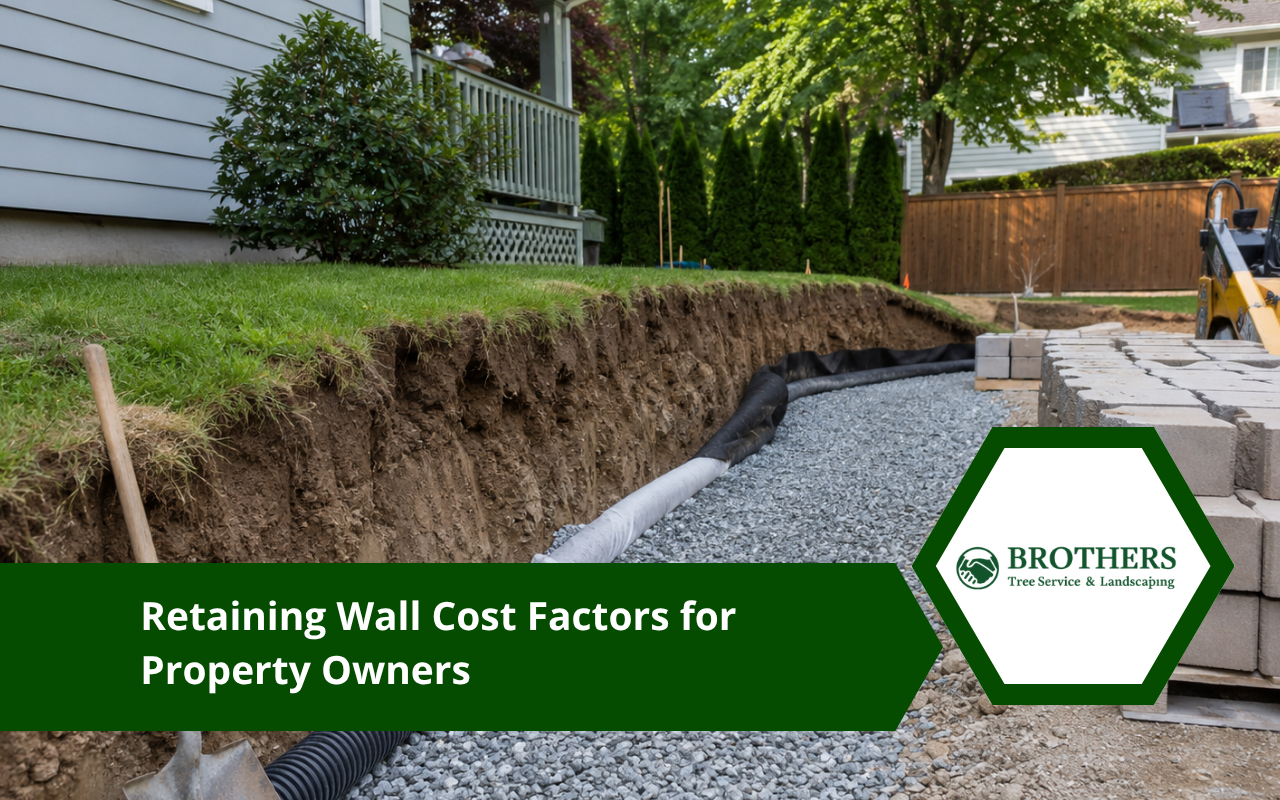
Understanding retaining wall cost starts with slope, wall height, soil conditions, drainage, material choice, access, and the amount of excavation required. Request your wall estimate if you are comparing options and want a clearer picture of what may affect the final project price.
At Brothers Tree Service & Landscaping, we help property owners look at retaining walls as site systems that need structure, drainage, access, and long-term maintenance—not just stacked materials.
Start With the Purpose of the Wall
A short garden wall has different requirements than a taller wall holding back a slope near a driveway or structure. The purpose affects design, excavation, base preparation, drainage, and material selection.
Common Retaining Wall Goals
- Create level planting areas
- Manage changes in grade
- Reduce soil movement
- Define outdoor spaces
- Support landscaping layouts
Wall Height Changes the Project Quickly
As a wall gets taller, the amount of soil pressure behind it increases. Taller walls may need more excavation, stronger base preparation, engineered design, reinforcement, or additional review.
Height should be one of the first measurements discussed during planning.
Drainage Can Affect Both Price and Long-Term Performance
Schedule your site evaluation before choosing materials if water collects on the slope or near the proposed wall. Drain rock, drainage pipe, outlets, and grading may need to be included in the scope.
Review our explore retaining wall uses guide for more planning context.
Use Material Choice to Balance Appearance and Budget
| Material | Appearance | Planning Consideration |
|---|---|---|
| Concrete block | Clean and consistent | Modular installation |
| Natural stone | Organic and textured | More fitting and labor |
| Timber | Warm and rustic | Moisture and lifespan |
| Poured concrete | Solid and modern | Formwork and reinforcement |
Excavation and Base Preparation Are Major Cost Drivers
The visible wall is only part of the project. Soil may need to be excavated, hauled away, replaced with compacted base material, or adjusted to create a stable foundation.
A difficult slope or rocky soil can increase labor even when the finished wall is relatively short.
Site Access Can Change Equipment and Labor Needs
A wall beside an open driveway is easier to access than one behind a house with narrow gates, fences, or steep terrain.
Budget Tip: Ask how materials and equipment will reach the work area. Limited access can increase handling time significantly.
Drainage Problems Should Be Solved Before the Wall Hides Them
Water pressure behind a wall can contribute to bulging, movement, or premature failure. Drainage should be part of the design, not an afterthought.
This may include gravel backfill, perforated pipe, outlets, and grading above the wall.
Use the Landscape Plan to Avoid Rebuilding Later
Future patios, fences, stairs, planting beds, or irrigation can affect wall layout. Planning those features together can prevent conflicts after the wall is complete.
Use our review smart landscape planning guide for broader design considerations.
Compare Project Scope Instead of a Price Per Foot Alone
A simple price-per-foot figure may leave out excavation, drainage, base preparation, hauling, steps, caps, corners, or restoration work.
Ask what is included before assuming two estimates describe the same project.
Permits and Engineering Can Affect Some Projects
Taller walls, walls near structures, and walls supporting significant loads may require additional review. Requirements vary by jurisdiction and site conditions.
Confirm those needs early so design and budgeting stay aligned.
Think About Maintenance Before Selecting the Material
Different materials weather differently. Timber may need more long-term attention, while block or stone systems can still require joint, drainage, or settlement checks.
Choose based on both initial appearance and the maintenance you are willing to manage.
Use Local Landscaping Experience for Site Integration
A retaining wall should fit the grading, planting, drainage, and access patterns around the rest of the property.
For local service information, visit our explore Belfair landscaping services page.
Plan for What Happens Above and Below the Wall
Water, soil, planting, foot traffic, and future structures above the wall can change loading. Drainage and base conditions below the wall also affect performance.
Our team at Brothers Tree Service & Landscaping can help property owners think through the entire site instead of viewing the wall as an isolated feature.
Use the Estimate to Understand Long-Term Value
A strong estimate should explain excavation, material, drainage, base preparation, cleanup, and any site-specific challenges.
For broader property improvement options, review our explore complete landscaping services page.
Ask How the Wall Area Will Be Finished After Construction
Retaining wall work can disturb lawn, planting beds, and nearby soil during excavation. The final estimate should explain whether grading, topsoil, seed, mulch, or other restoration is included after construction.
This matters because a lower wall quote may not include the work needed to make the surrounding area usable again. Comparing restoration scope helps property owners understand the true finished-project cost.
Retaining Wall Pricing FAQs
What affects the price of a retaining wall most?
Height, length, material, excavation, access, drainage, soil conditions, and site complexity can all affect the final amount.
Is natural stone more expensive than block?
Often, but the difference depends on material availability, labor, fitting, transportation, and design complexity.
Why is drainage important behind the wall?
Drainage helps reduce water pressure behind the structure and supports more stable long-term performance.
Can a retaining wall be built on a steep slope?
Yes, but steep sites may require more excavation, access planning, reinforcement, or engineered design.
Should I compare estimates by price per foot?
Only if the scope is similar. A lower price may exclude drainage, excavation, base preparation, hauling, or restoration.
Build a Budget Around the Whole Site
If you are comparing retaining wall cost, evaluate height, drainage, material, excavation, access, and long-term maintenance together. Start your wall project with Brothers Tree Service & Landscaping and plan the installation around the actual site conditions.