
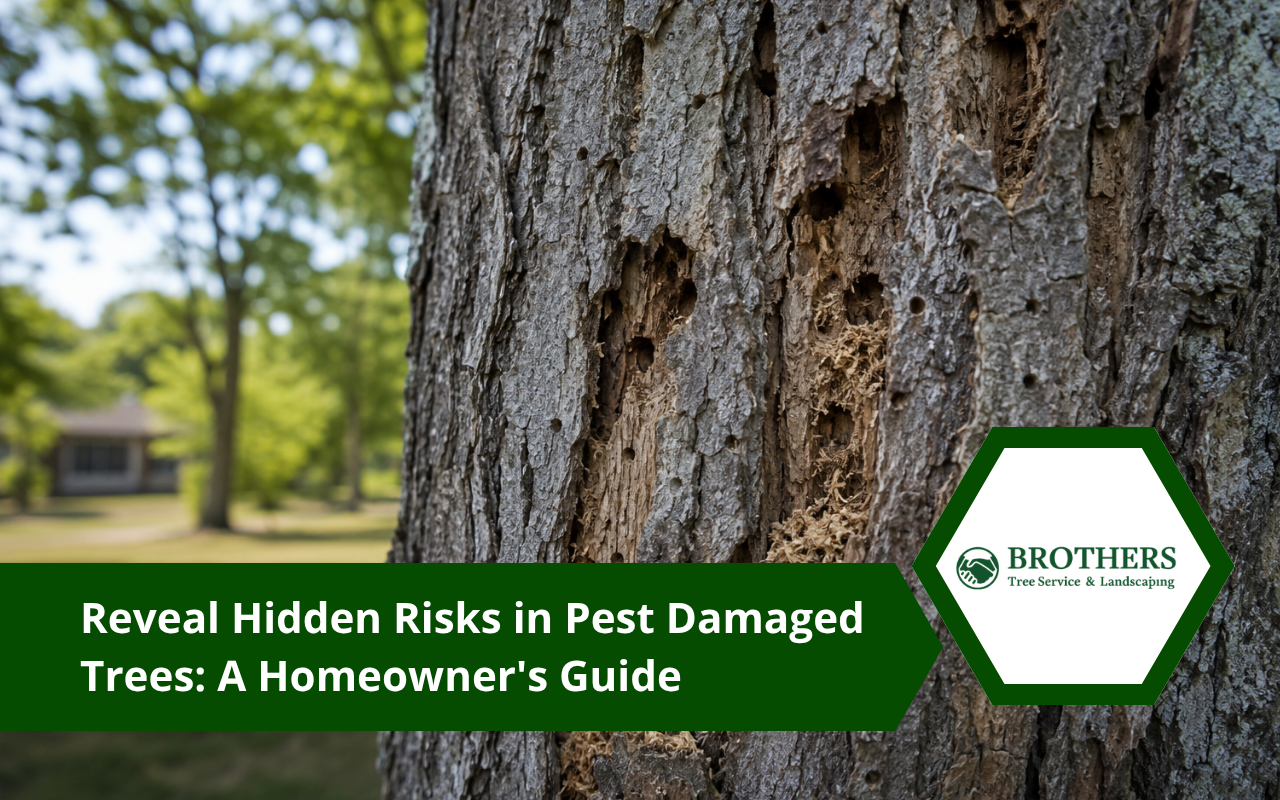
Pest damaged trees may look healthy from a distance while insects weaken the bark, branches, or inner wood. Small holes, loose bark, and thinning leaves can be early warnings. At Brothers Tree Service & Landscaping, we encourage homeowners to recognize these signs before the damage becomes harder to manage.
Regular inspections can reveal problems that are easy to miss during normal yard care. Our guide to identifying common tree pests can help you understand what may be affecting your trees and when the condition needs closer attention.
Early Warning Signs of Insect Activity
Insect damage on trees can appear in several ways. Some pests feed on leaves, while others enter through the bark and tunnel into the wood. The sooner you notice unusual changes, the easier it may be to protect the tree from continued stress.
- Small, round, or oval pest holes in bark
- Sawdust-like material near the trunk or branch joints
- Loose, cracked, peeling, or sunken bark
- Yellow leaves or early leaf loss
- Dead twigs and thinning areas in the canopy
- Sticky residue on leaves or surfaces below the tree
- Visible insects, eggs, webs, or larvae
One sign alone does not always confirm an active infestation. Weather, disease, and physical injuries can create similar symptoms. Look for several changes occurring together, especially when the tree also shows slow growth, branch dieback, or unusual stress.
How Pests Weaken Bark and Branches
Many insects damage the tissues that move water and nutrients through a tree. Borers may create tunnels beneath the bark, while sap-feeding insects remove moisture from leaves and young shoots. This pressure can reduce growth and leave the tree less able to recover from heat, drought, or storms.
Over time, pest damaged trees may develop dead sections, weak branch connections, or hidden areas of decay. Internal damage can be difficult to see from the ground. A branch may still hold leaves even though pests have reduced the strength of the wood beneath its surface.
Weak trees from pests can also become more open to disease. Damaged bark creates entry points where fungi or bacteria may reach stressed tissue. These combined problems can speed up decline and make it harder for the tree to repair itself.
What Do Bark Holes Mean?
Pest holes in bark often suggest that insects have entered or exited the tree. Their size, shape, and location may help identify the cause. Some beetles leave small round holes, while other borers create wider openings or winding patterns beneath loose bark.
Not every opening is caused by a harmful pest. Birds, old pruning cuts, weather damage, and normal bark changes may also leave marks. With Brothers Tree Service & Landscaping, you receive an evaluation based on the full condition of the tree rather than one symptom alone.
Check the area around each hole for fresh sap, dark stains, loose bark, or fine wood material. These signs may point to current activity. Older holes with dry edges may show past damage, but the tree should still be watched for new symptoms.
Common Tree Pests and Their Damage
Different pests affect trees in different ways. The type of tree, season, and surrounding conditions can influence which insects appear. Recognizing the general damage pattern can help homeowners decide whether simple monitoring or professional support is the safer next step.
- Bark beetles: Tunnel beneath bark and may interrupt water movement.
- Wood borers: Feed inside branches or trunks and may weaken the wood.
- Aphids: Remove sap from leaves and often leave sticky residue.
- Scale insects: Attach to stems or leaves and slowly reduce tree vigor.
- Caterpillars: Eat foliage and may thin large parts of the canopy.
- Mites: Damage leaves and may create spotting, curling, or fine webbing.
Healthy trees are often better able to handle minor insect activity. Proper watering, careful pruning, and suitable soil conditions can support natural defenses. Our information about the benefits of healthy tree care explains why ongoing maintenance matters.
Steps Homeowners Can Take Right Away
Early action does not always mean applying a treatment. Begin by documenting the symptoms and reducing stress around the tree. Avoid cutting into damaged areas without knowing the cause, since unnecessary wounds may create new places for insects or disease to enter.
- Photograph the bark, leaves, holes, and affected branches.
- Check the tree every few days for fresh changes.
- Remove fallen leaves and loose debris around the base.
- Water during dry periods without soaking the trunk.
- Keep mulch away from direct contact with the bark.
- Avoid using pesticides until the pest is identified.
- Arrange an assessment when damage spreads or branches weaken.
Preventive care can reduce some conditions that attract pests. Our guide on how to protect trees from pests covers practical habits that support stronger trees throughout the year.
When Professional Evaluation Becomes Necessary
A tree care specialist should examine the tree when holes are spreading, bark is falling away, or large branches show dieback. Professional attention is also important when the tree leans, develops cracks, or stands near a house, driveway, play area, or other frequently used space.
Our team at Brothers Tree Service & Landscaping can review the visible symptoms, tree structure, and surrounding conditions. This wider assessment helps separate minor insect activity from damage that may affect stability or long-term health.
A tree pest control service may recommend monitoring, pruning, targeted treatment, or another care plan based on the pest and the tree’s condition. Homeowners can request a tree damage evaluation when the warning signs are difficult to identify or appear to be getting worse.
Frequently Asked Questions
Can a tree recover from insect damage?
Recovery depends on the pest, the amount of damage, and the overall health of the tree. Minor leaf damage may improve with proper care, while deep bark or wood damage can be more serious. Reviewing healthy tree care practices can help you understand the conditions that support recovery.
Are small holes in bark always dangerous?
Small holes are not always a sign of severe damage, but they should not be ignored. Fresh sawdust, sap, peeling bark, or nearby branch decline may suggest active insects. Our tree pest identification guide can help you compare common warning signs.
Should I spray a tree when I see insects?
Avoid spraying until the insect and damage are correctly identified. Some insects are harmless or beneficial, and the wrong product may affect pollinators or other wildlife. Start with inspection, basic tree care, and guidance on preventive pest protection.
How often should homeowners inspect their trees?
Inspect trees several times during the growing season and after strong winds or severe weather. Look at the trunk, major branches, leaves, and soil around the base. Regular checks make it easier to notice new insect damage on trees before it spreads through larger areas.
When should damaged branches be removed?
Removal may be needed when a branch is dead, cracked, hanging, or structurally weak. Do not attempt to cut large or elevated limbs without proper equipment. When you choose Brothers Tree Service & Landscaping, we can help determine whether pruning is suitable for the tree’s condition.
Protect Your Trees Before Damage Spreads
Pest damaged trees can become weaker long before the risk is obvious. Watching for bark holes, thinning leaves, dead branches, and fresh wood material gives you a better chance to respond early. Preventive care and timely evaluation can protect both the tree and the areas around it.
With Brothers Tree Service & Landscaping, you can get clear guidance based on the warning signs affecting your property. Use our contact page to discuss pest-related tree concerns and take the next step toward a safer, healthier landscape.