
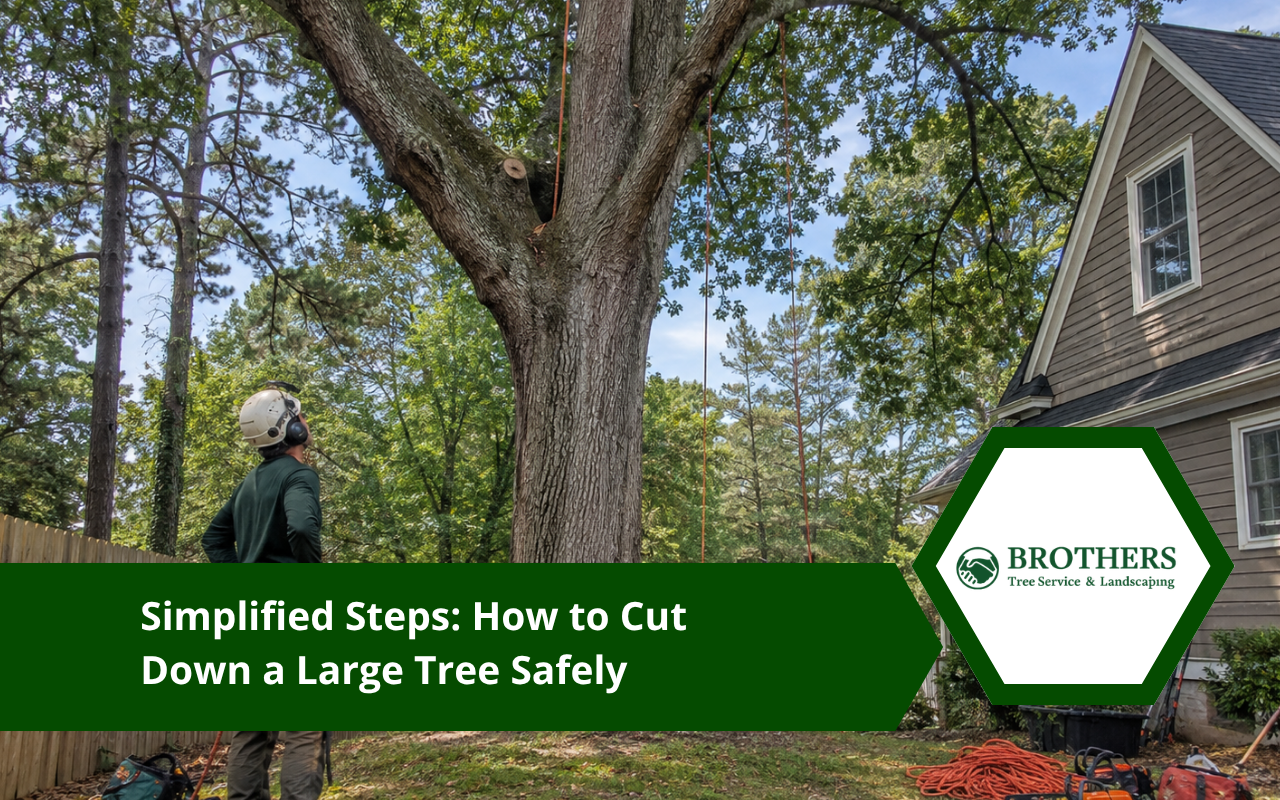
Removing a mature tree requires more than a chainsaw and a planned direction. Tree height, trunk condition, nearby structures, utility lines, wind, and uneven ground can quickly change the risk level. Understanding how to cut down a large tree begins with evaluating whether the project can be completed safely at all.
Request free same-day estimates and 24/7 emergency tree services
Large trees can behave unpredictably once cutting begins. Hidden decay, heavy limbs, or an unbalanced canopy may affect how the trunk moves. The following overview explains the planning process, major warning signs, and situations that require professional assistance.
Assessing Tree Size and Surroundings
Before considering any large tree removal methods, examine the entire tree and the surrounding property. Estimate its height, inspect the trunk, and observe its natural lean. Then identify everything within its potential fall radius.
Review the area for:
- Homes, garages, fences, and parked vehicles
- Overhead utility or communication lines
- Dead branches or suspended limbs
- Trunk cavities, cracks, or fungal growth
- Sloped, wet, soft, or uneven ground
- Pedestrians, roads, and neighboring properties
A tree may appear healthy from one side while containing significant decay elsewhere. When its height exceeds the available open space, controlled rigging or sectional removal may be necessary.
Checking Local Regulations and Permits
Local requirements should be reviewed before removal begins. Some jurisdictions regulate trees according to species, trunk diameter, location, or environmental importance. Additional rules may apply within homeowners’ associations or protected areas.
Contact the appropriate municipal office to determine whether a permit is required. Also confirm property boundaries when the trunk or canopy is close to a neighboring lot. Completing these checks early can prevent disputes, fines, and project delays.
Determine Whether the Tree Is Safe for DIY Removal
Small trees in open, level areas may present fewer complications. However, mature trees often require specialized equipment, trained crews, and controlled lowering systems.
| Observed Condition | Primary Concern | DIY Suitability | Recommended Response |
|---|---|---|---|
| Small tree with an open fall zone | Limited obstacles | Potentially manageable | Confirm local rules and use proper safety equipment |
| Large tree near a home or fence | Property damage | Not recommended | Request a professional evaluation |
| Dead, split, or hollow trunk | Unpredictable structural failure | Unsafe | Keep the area clear and contact a professional |
| Heavy or unbalanced canopy | Unexpected movement | Unsafe | Use professional rigging and removal methods |
| Tree near utility lines | Electrical injury or fire | Never appropriate | Contact the utility provider and an insured tree company |
| Storm-damaged or leaning tree | Sudden collapse | Emergency risk | Restrict access and request immediate assistance |
When several hazards overlap, professional large tree removal is generally the safest option.
Creating a Clear Work and Escape Area
A clear work area is an essential part of large tree cutting safety. Remove loose tools, brush, stones, and other obstacles that could interfere with movement. Children, pets, and bystanders should remain well outside the potential fall zone.
Escape planning should account for more than the expected direction of movement. Branches can break, trunks can rotate, and damaged wood may fall unexpectedly. If the area does not provide enough unobstructed space, stop and arrange a professional assessment.
Gathering the Necessary Safety Equipment
Tree removal requires equipment suited to the tree’s diameter, condition, and surroundings. At minimum, protective equipment commonly includes:
- A forestry helmet with eye and hearing protection
- Chainsaw-resistant chaps
- Cut-resistant gloves
- Steel-toe, slip-resistant boots
- High-visibility clothing
- A stocked first-aid kit
- Reliable communication equipment
Every tool should be inspected before work begins. Damaged safety gear, dull cutting equipment, and improvised ropes can increase the likelihood of an accident.
Specialized equipment may include climbing systems, aerial lifts, winches, cranes, or rigging lines. These tools require training and should not be treated as substitutes for professional experience.
Understanding Why Cutting Technique Matters
Directional cuts and retained hinge wood help influence how a sound tree moves. However, their effectiveness depends on accurate measurements, healthy wood, proper equipment, and a clear work area.
Providing one standard cutting formula can create a false sense of safety. Trunk diameter, lean, species, decay, wind, and canopy weight all affect the appropriate approach. A cut made too deeply may remove directional control, while a poorly positioned cut may cause splitting or unexpected movement.
If you are unfamiliar with chainsaw operation or cannot accurately evaluate the trunk, do not begin cutting.
Recognizing Situations That Require Professional Removal
Stop planning a DIY project if the tree:
- Leans toward a home, roadway, or utility line
- Contains cavities, cracks, rot, or extensive fungal growth
- Has large dead branches above the work area
- Was damaged by wind, lightning, or soil movement
- Requires climbing or an aerial lift
- Cannot fall safely within the available space
- Is located on a steep slope or unstable ground
- Could affect neighboring property
A professional crew can divide the tree into controlled sections and lower material into designated areas. This approach helps protect nearby structures when open-space felling is not possible.
Planning Cleanup and Wood Disposal
Cleanup should be considered before removal starts. Large trunks and branches can be heavier than expected, making them difficult to move without machinery.
Possible disposal options include:
- Cutting suitable wood into firewood
- Chipping smaller branches for mulch
- Hauling logs to an approved facility
- Grinding the stump
- Filling and restoring the affected area
Check local rules before transporting or burning wood. Some regions restrict the movement of firewood to reduce the spread of pests and tree diseases.
Frequently Asked Questions
Is it safe to cut down a large tree without help?
Working alone is not recommended. Large trees can shift, split, or drop branches without warning. A second person cannot replace a qualified crew when structural hazards, buildings, or utility lines are present.
What equipment is needed for large tree removal?
The equipment depends on the tree and its surroundings. Protective gear is essential, while complex projects may require rigging systems, aerial lifts, winches, cranes, or other professional equipment.
Do I need a permit to remove a large tree?
Permit requirements vary by municipality, tree species, size, and property location. Contact the local authority and review homeowners’ association rules before scheduling the removal.
How can I tell whether a tree is structurally unsafe?
Major warning signs include trunk cracks, cavities, fungal growth, exposed roots, sudden leaning, hanging limbs, and large sections without foliage. A professional inspection can determine the severity.
How much space does a large tree need for removal?
The required space depends on the tree’s height, lean, canopy, and surrounding obstacles. When the available area is limited, the tree may need to be removed in controlled sections.
Choose the Safest Removal Approach
Understanding how to cut down a large tree does not mean every tree should become a DIY project. The safest decision begins with recognizing the tree’s condition, the available space, and the consequences of unexpected movement.
For more guidance, explore when to consider tree removal , essential equipment for tree removal , and how professionals remove large trees .
Brother Tree Service offers licensed and insured assistance backed by more than 11 years of experience. Request free same-day estimates and 24/7 emergency tree services when a large, leaning, damaged, or hazardous tree requires professional attention.