
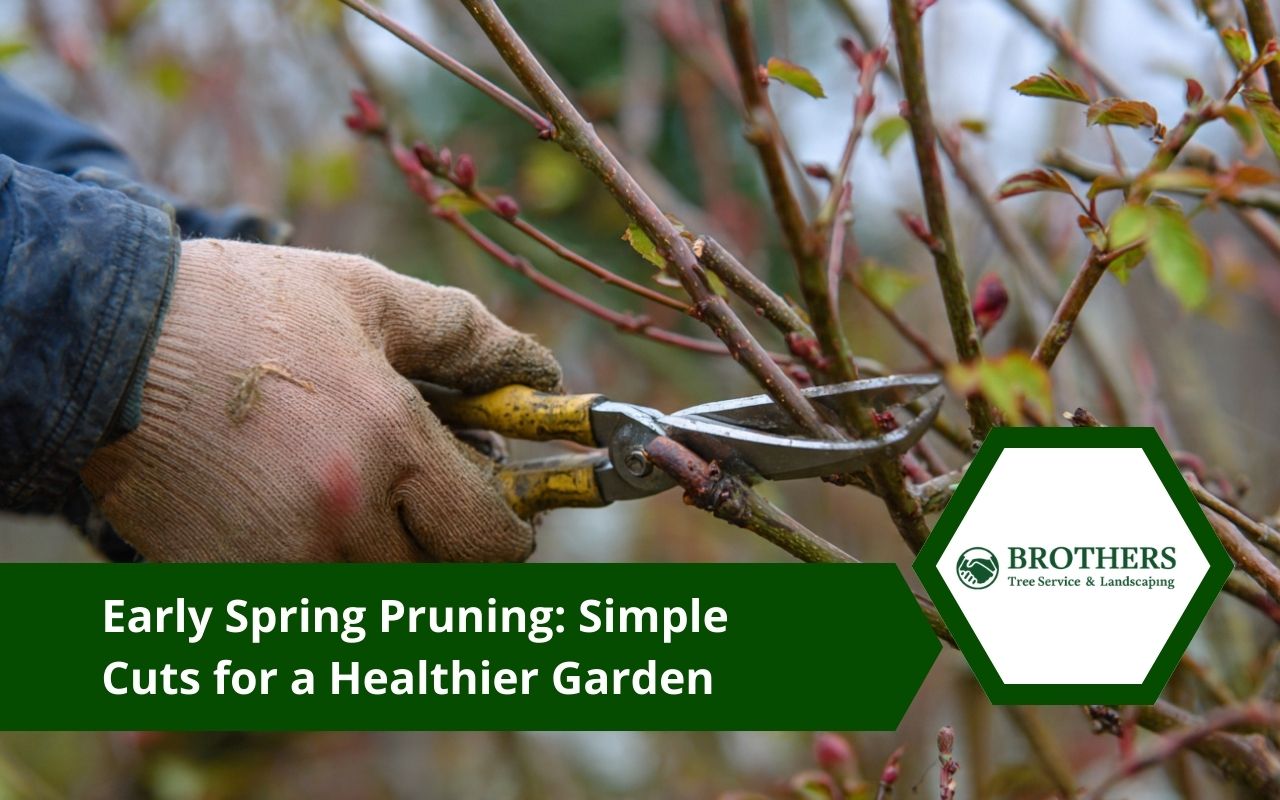
Pruning can feel like garden magic, especially on crisp spring mornings. With early spring pruning, you shape plants before they surge with new life. While winter still lingers, a few careful cuts can help your garden thrive. Even if it feels odd to trim so soon, this step supports stronger growth.
In addition, dormant season trimming removes what is old and makes room for what is new. As a result, you guide your plants toward healthier blooms and better harvests. It is not only about cutting back. Instead, it is about helping flowering trees and shrubs shine all season.
Why Early Spring Pruning Helps Plants Grow Better
When Brothers Tree service & Landscaping plans early spring pruning, the goal is more than a clean look. First, removing dead or damaged branches gives plants a fresh start. Consequently, fewer pests and diseases linger in old wood. With fewer problems to manage, plants can focus on leaves, flowers, and fruit.
- Removes weak or damaged growth early
- Helps reduce hiding spots for pests
- Supports stronger, healthier branches
Also, thinning branches improves airflow and lets more light reach the center. Therefore, leaves dry faster after rain, which helps prevent fungus. Over time, the shape looks better, too. Finally, the plant often produces bigger blooms and fuller yields, because energy goes to the healthiest areas.
Dormant Season Trimming and Flowering Tree Timing Made Easy
Dormant season trimming means you cut while plants are still resting. Because growth has not fully restarted, the plant usually feels less stress. In other words, you can shape trees and shrubs now, and they respond with a strong burst once temperatures rise.
- Remove crossing or rubbing branches
- Cut inward-growing stems to open the center
- Clear weak shoots so strong ones can lead
However, flowering tree timing matters. For plants that bloom on older wood, heavy cuts can remove future flowers. So, Brothers Tree service & Landscaping recommends you watch buds and learn how each tree blooms. If you want a deeper look at seasonal planning, explore this guide on dormant tree pruning tips and see what fits your yard.
Tools That Make Pruning Safer and Cleaner
The right tools help every cut heal faster. For example, sharp bypass pruners work well on small stems. For thicker branches, a long-handled lopper gives better reach and control. Then, for larger limbs, a pruning saw makes smoother cuts with less tearing.
- Bypass pruners for small branches
- Loppers for medium branches
- Pruning saw for larger limbs
Additionally, wear gloves and eye protection. Afterward, clean blades and keep them dry. As a result, tools last longer and spread less disease. Proper gear also makes early spring pruning quicker and more comfortable.
Plants That Respond Well to Early Pruning
Many plants handle a late-winter or early-spring trim well. Deciduous trees often benefit before leaves open, because structure is easy to see. Likewise, many fruit trees do better when you remove old, weak growth early. Even some evergreens can be lightly shaped for size and balance.
Still, flowering tree timing can change the plan. So, if you are unsure, Brothers Tree service & Landscaping can help you match cuts to each plant type. To stay ahead of issues, you can also review a seasonal tree inspection checklist before you prune.
Pruning Methods That Work for Shrubs, Trees, and Fruit Plants
Different plants need different cuts. For shrubs with thin stems, cut just above a healthy bud. For tree limbs, use a simple three-step cut to prevent bark tearing. First, make a small undercut. Next, cut from the top. Then, finish just outside the branch collar.
In addition, flowering plants need gentle thinning to let light in. Fruit trees often need selective thinning to balance future crops. Therefore, learning a few basic methods helps you prune with confidence. For more practical care ideas, see this tree care guide with simple tips.
When to Start Pruning in Early Spring
Timing matters, so watch both weather and buds. In many areas, the best window is after the harshest cold passes but before buds swell. If you see early bud swelling, it is often time to act. However, late frosts can still happen, so stay cautious.
Also, flowering tree timing is key for trees that bloom on older wood. If you cut too early or too much, you may reduce flowers. So, if you want reliable blooms, match your cuts to your plant’s bloom cycle and local patterns.
Pruning Dos and Don’ts for Better Results
Good habits protect plant health. For instance, clean cuts at a slight angle help water run off. Also, remove damaged and rubbing branches first to open the center. Meanwhile, step back often to check shape and balance.
- Do cut cleanly and at a slight angle
- Do remove damaged and rubbing branches first
- Don’t remove more than one-third at once
On the other hand, avoid leaving stubs. Instead, cut just outside the branch collar. Also, never use dull tools, because they crush stems. With these steps, early spring pruning supports steady growth without stressing the plant.
Care After Pruning and Signs You Did It Right
After pruning, simple care speeds recovery. For example, add mulch to hold moisture, but keep it away from trunks. Then, water deeply when the top inch of soil feels dry. As a result, roots grow stronger and plants bounce back faster.
Next, look for healthy new shoots and even leaf growth. Also, check for smooth healing around cuts. If growth looks balanced and strong, your timing likely worked well. When you need hands-on help from Brothers Tree service & Landscaping, reach out through the contact page for pruning support.
Frequently Asked Questions
What is early spring pruning best for?
It is best for removing damaged wood and shaping many trees and shrubs before strong new growth begins.
Is dormant season trimming safe for most plants?
Yes, many plants handle it well because they are resting. However, some flowering plants need careful timing.
How do I handle flowering tree timing?
Check whether the tree blooms on old wood or new wood. Then, prune at a time that protects buds.
What tools should I use for clean cuts?
Use sharp bypass pruners, loppers, and a pruning saw when needed. Also, clean tools after use.
When should I call a professional service?
If limbs are large, high, or near power lines, call a pro. Also, call if the tree shows major damage or disease.
Wrap-Up: A Better Season Starts With Smart Cuts
With early spring pruning, you help plants start strong and stay healthier. Likewise, dormant season trimming can improve structure before growth begins. By watching flowering tree timing, using clean tools, and avoiding heavy cuts, your garden can look fuller and brighter. For tailored help, Brothers Tree service & Landscaping can guide your next steps.