
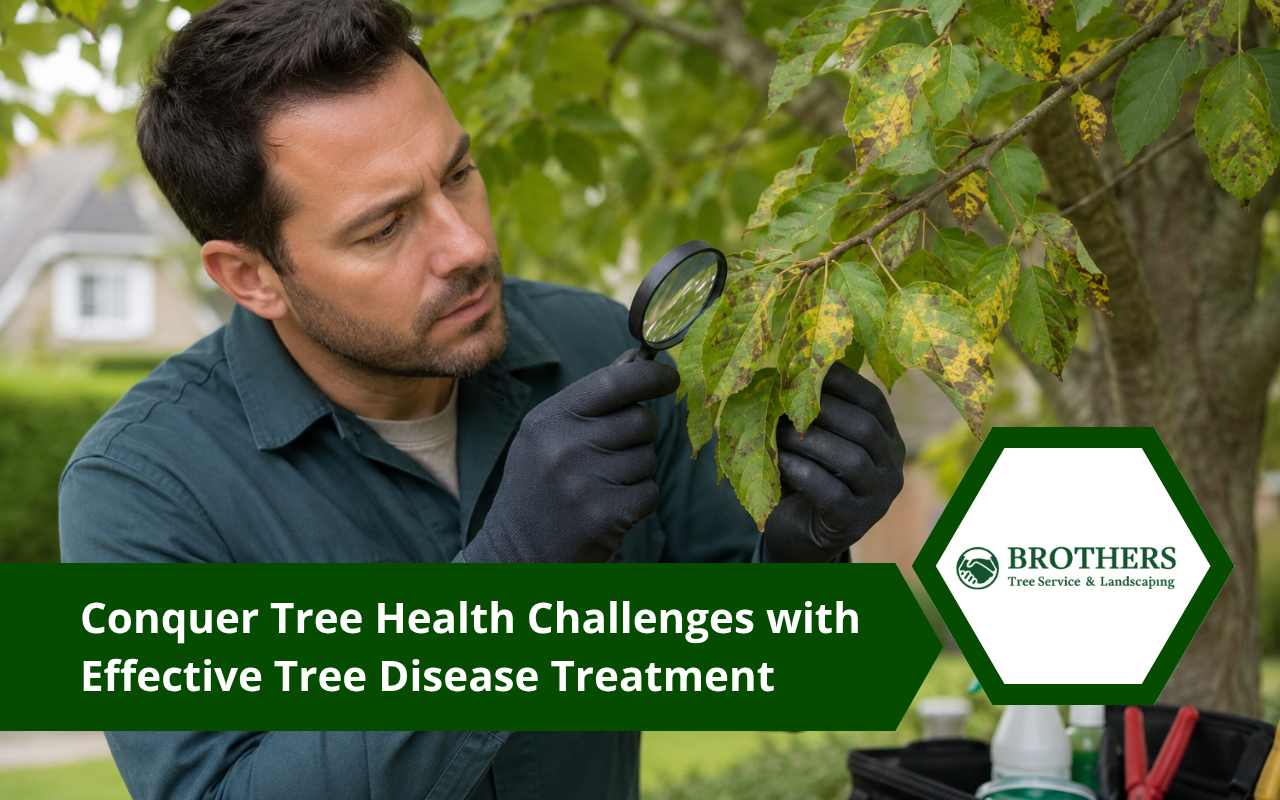
Trees often show small warning signs before a serious problem develops. Changes in leaves, bark, roots, or growth can reveal disease, decay, pest activity, or stress from poor growing conditions.
Understanding these signs can help you protect your landscape and decide when tree disease treatment may be needed. At Brothers Tree Service & Landscaping, we encourage homeowners to inspect trees throughout the year.
Regular observation, careful watering, and guidance from our tree care guide can support healthier growth and reduce avoidable stress.
Early Warning Signs of Tree Health Problems
Many tree problems begin with subtle changes. A few damaged leaves may not seem serious, but spreading symptoms can point to infection, pests, decay, or environmental stress.
Early tree disease treatment may limit damage before the trunk, roots, or major branches become affected.
Tree Symptoms to Watch For
- Leaves develop unusual spots, holes, curling, or discoloration.
- Branches lose leaves while the rest of the canopy remains full.
- Bark cracks, peels, sinks, or develops dark areas.
- Mushrooms or shelf-like growths appear near the trunk or roots.
- Dead branches increase without an obvious cause.
- Sawdust, small holes, or insects appear around damaged wood.
Compare symptoms across the whole tree instead of focusing on one leaf or branch. A repeated pattern often provides a clearer picture of the tree’s condition.
Understand Leaf, Bark, and Root Changes
Leaf changes can result from disease, pests, poor soil, drought, or excess water. Yellow leaves may suggest root stress, while brown edges can develop during dry weather.
Dark spots, powdery coatings, or early leaf drop are common tree fungus signs that deserve closer attention.
Bark can also reveal hidden problems. Sunken areas may indicate cankers, while loose bark can expose injured or decaying wood. Our guide to identifying tree pests can help you compare disease symptoms with signs caused by insects.
A single symptom does not always confirm a disease. Trees often respond to several stresses in similar ways, so an inspection should consider weather, soil drainage, recent pruning, and nearby plant health.
Key Takeaway
Tree disease signs can look similar to pest, drought, or drainage stress. Look for patterns across leaves, bark, roots, and branches before deciding what action is needed.
Compare Common Tree Diseases and Symptoms
Common tree diseases affect different parts of a tree. Some damage leaves, while others move through branches, roots, or internal wood.
With Brothers Tree Service & Landscaping, you receive guidance based on the symptoms, tree condition, and surrounding landscape.
Disease Signs and Possible Next Steps
| Visible Symptom | Possible Concern | Helpful Next Step |
|---|---|---|
| Brown, black, or yellow leaf spots | Leaf spot disease or fungal activity | Monitor spread and remove infected fallen leaves. |
| White or pale coating on leaves | Powdery mildew | Improve airflow and avoid overhead watering when possible. |
| Sunken areas on bark | Cankers or trunk injury | Request an inspection if the area expands. |
| Mushrooms near trunk or roots | Root rot or wood decay fungi | Have the base and root area evaluated. |
| Sudden branch decline | Wilt disease, pests, or root stress | Compare symptoms across the canopy. |
Some conditions remain limited, while others spread quickly. The right response depends on the disease, its stage, and the overall health of the tree.
Recognize How Moisture, Pests, and Decay Connect
Tree health problems rarely develop in isolation. Poor drainage can weaken roots, making the tree more open to fungi and insects. Drought can also reduce natural defenses.
Once pests enter damaged bark, they may carry pathogens into vulnerable tissue. Moisture around the trunk is especially important. Soil that stays wet may encourage root disease, while dry soil can stress fine roots.
Effective care should address growing conditions instead of focusing only on visible symptoms. Decay often develops slowly inside the trunk or major limbs. Mushrooms, cavities, soft wood, and hollow sounds may indicate internal damage or structural weakness.
Key Takeaway
Tree disease, pests, moisture, and decay often overlap. The best response should consider the whole tree and the conditions around it.
Use Practical Diseased Tree Care at Home
Basic diseased tree care can reduce stress and support recovery when problems are mild. Good habits also help healthy trees resist future infections.
Our article about tree health benefits explains why regular care matters for the entire landscape.
Tree Care Habits That May Help
- Water slowly near the root zone instead of against the trunk.
- Allow soil to dry slightly between watering sessions.
- Keep mulch away from direct contact with bark.
- Remove fallen leaves when they show signs of infection.
- Clean pruning tools before moving between trees.
- Avoid cutting large or infected branches without proper guidance.
Do not apply a treatment simply because symptoms look fungal. The wrong product may not address the cause. It can also delay the correct response while the condition continues to spread.
Know When Professional Tree Inspection Makes Sense
A professional inspection may be helpful when symptoms spread quickly, return each season, or affect major branches. It is also wise when mushrooms appear near the base, roots become exposed, or the tree begins leaning without a clear reason.
Our team can review leaf patterns, bark damage, pest activity, drainage, and visible decay. A tree care specialist can then explain whether monitoring, pruning, soil changes, or another tree disease treatment approach may be appropriate.
A tree disease service is especially valuable when several possible causes share the same symptoms. Careful diagnosis helps avoid unnecessary work and supports decisions based on the tree’s actual condition.
Key Takeaway
Professional inspection is useful when symptoms spread, return, affect major limbs, or appear near the trunk and roots.
Frequently Asked Questions
Can a tree recover from a fungal disease?
Recovery depends on the fungus, the affected area, and the tree’s overall health. Mild leaf infections may improve with better airflow and sanitation. Our tree care tips can help you reduce stress while monitoring changes.
Are mushrooms always a sign that a tree is dying?
No. Some mushrooms grow from organic material in the soil. However, mushrooms attached to the trunk, roots, or major limbs may indicate decay. A professional inspection can help determine whether internal wood has been affected.
How can I tell whether insects caused the damage?
Look for small holes, tunnels, loose bark, sawdust, or visible insects. Pest damage can resemble disease symptoms. Use our guide to common tree pests to identify patterns before choosing the next step.
Should I remove infected leaves and branches?
Removing fallen leaves can reduce some sources of infection. Small affected branches may also need pruning. Large limbs or branches near structures should be handled carefully. At Brothers Tree Service & Landscaping, we can assess whether removal may improve tree health.
How often should homeowners inspect their trees?
Check trees several times each year and after strong weather. Look for changes in leaves, bark, roots, and branch growth. The information in our tree health resource can help you build a preventive routine.
Protect Your Trees with Timely, Informed Care
Healthy trees depend on early attention, balanced watering, clean pruning practices, and careful observation. When symptoms continue or structural concerns appear, professional guidance can help you understand the cause and protect nearby trees.
When you choose Brothers Tree Service & Landscaping, we examine visible symptoms and the conditions around the tree. To discuss unusual leaf changes, fungus, decay, or pest activity, contact our team about your tree health concerns.