
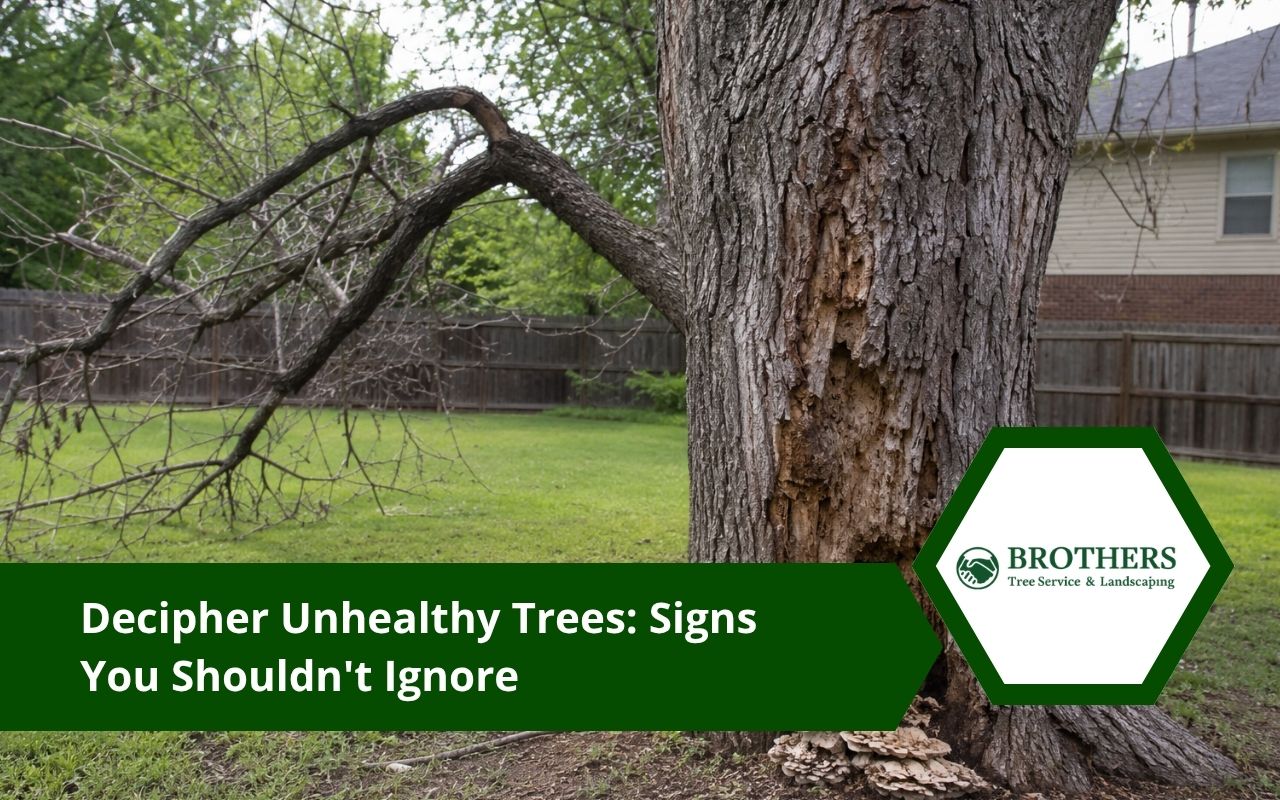
Spotting unhealthy trees early helps protect your home, yard, and family. Trees give shade, beauty, and comfort, but they can become risky when disease, decay, or poor growth goes unnoticed.
At Brothers Tree Service & Landscaping, we help property owners understand warning signs before small problems become serious. With the right care, some trees can recover, while others may need safe removal.
Clear Signs Your Tree May Be Struggling
Walk around your yard and look at the full shape of each tree. Gaps in the crown, bare spots, and uneven growth can show that the tree is under stress.
- Large empty spaces where branches should be full
- Fallen twigs or small limbs near the base
- Dead stubs where branches have broken away
- Less bird or wildlife activity around weak areas
These signs may point to deeper tree decay signs. For more guidance, explore our seasonal tree inspection tips and learn when a closer review may be needed.
Bark Changes That Point to Tree Trouble
Healthy bark protects the tree from pests, moisture, and disease. When bark starts peeling, cracking, or falling away, the tree may be losing that natural shield.
Dark, soft, or wet-looking bark can point to decay inside the trunk. Small holes, tunnels, or sawdust near the bark may also show insect activity. Brothers Tree Service & Landscaping can inspect these signs and explain the safest next step.
What Do Unhealthy Tree Leaves Reveal?
Unhealthy tree leaves often change color before other parts of the tree look weak. Brown spots, yellow patches, curling edges, or early leaf drop can show stress from pests, poor soil, disease, or root trouble.
Look at whether the color change appears across the whole tree or only in certain areas. Random spots may suggest infection, while full yellowing can mean water or soil issues. You can also review our guide on identifying tree pests to compare common warning signs.
Weak Tree Structure and Hidden Safety Risks
A weak tree structure can make a tree more likely to break during wind, rain, or storms. Large limbs, deep cracks, and poor branch angles should never be ignored.
- Narrow branch joints that hold heavy limbs
- Cracks where two large branches meet
- One-sided growth that makes the tree lean
- Large limbs hanging over roofs, cars, or walkways
Some trees can be supported with trimming, cabling, or regular care. However, others may need unhealthy tree removal when the risk is too high.
Decay, Pests, and Fungal Growth Warning Signs
Mushrooms, shelf-like fungi, or soft wood near the base can show decay inside the tree. These signs often mean the wood is breaking down from within, even when the outside still looks stable.
Pests can also weaken a tree over time. Sticky residue, tiny holes, and sawdust-like material near the trunk may point to insects. A tree care specialist can check the damage and suggest treatment before the problem spreads.
When Professional Tree Care Makes Sense
Some warning signs are easy to see, but the real cause is not always clear. A trained eye can help decide whether care, pruning, treatment, or removal is the better choice.
- Call when several warning signs appear at once
- Ask for help after storm damage or sudden leaning
- Schedule checks before branches become unsafe
- Get advice before removing a large or old tree
Brothers Tree Service & Landscaping can review tree health concerns and help you protect your property with clear, honest guidance. You can also read our tree care guide and tips for simple ways to support healthier growth.
Frequently Asked Questions
Can unhealthy trees recover with proper care?
Yes, some unhealthy trees can recover when the problem is found early. Pruning, pest control, soil care, and watering may help, but a professional inspection gives the clearest answer.
When should a tree be removed?
A tree may need removal when it has major decay, severe leaning, large dead limbs, or a weak trunk. Safety should come first when the tree is near a home, driveway, or walkway.
Are discolored leaves always a serious problem?
No, not always. Some leaf changes come from weather or seasonal stress. However, repeated discoloration, early leaf drop, or spotted leaves should be checked before the issue spreads.
How often should trees be inspected?
Most trees should be checked at least once a year. Older trees, storm-damaged trees, or trees near structures may need more frequent reviews by a tree care specialist.
Who can help with tree health concerns?
Brothers Tree Service & Landscaping can inspect your trees, explain visible risks, and guide you toward the right care plan. Early help often prevents larger safety problems later.
Protect Your Property With Timely Tree Care
Regular checks help you catch unhealthy trees before they become dangerous. When you notice weak limbs, bark damage, fungi, pests, or unhealthy tree leaves, quick action can protect your landscape and your peace of mind.
Brothers Tree Service & Landscaping is here to help you make safe, practical choices for your trees. Learn more about the benefits of healthy trees or contact our team for dependable support.