
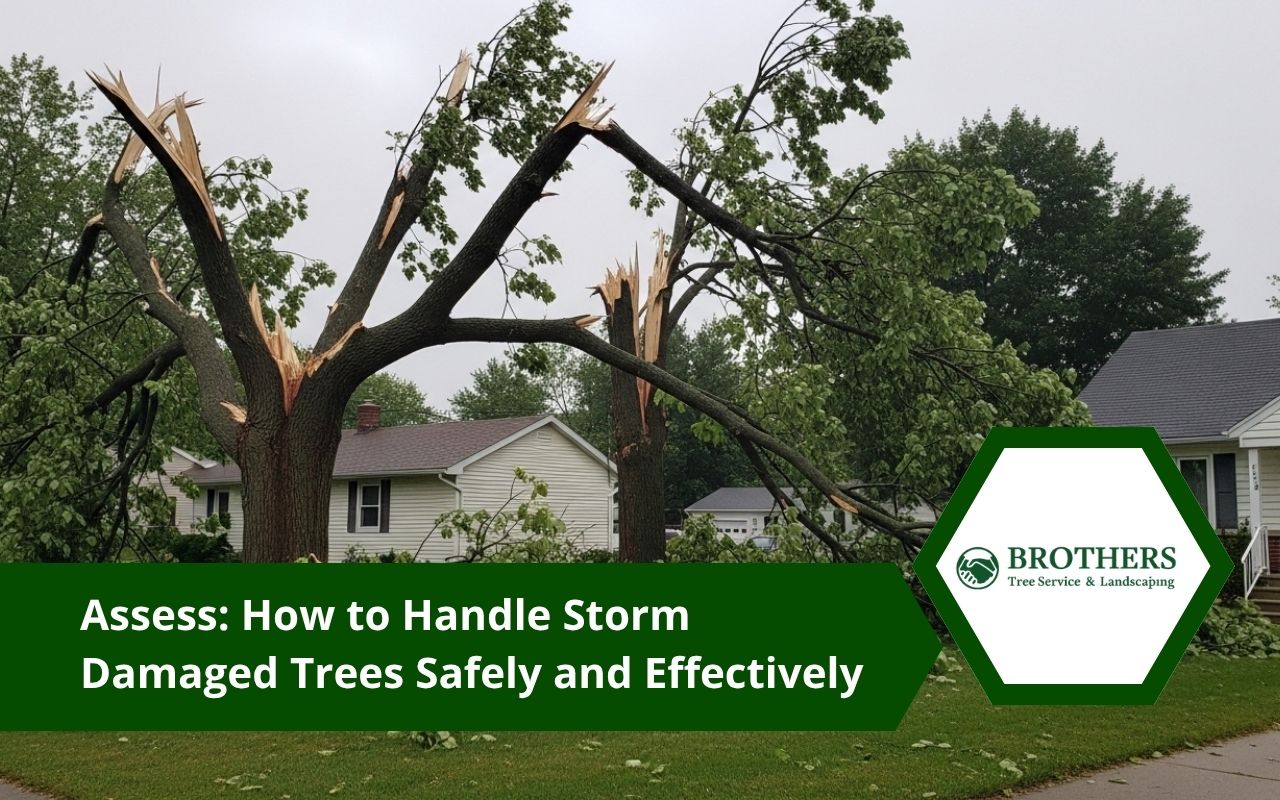
Assessing storm damaged trees can feel stressful after strong winds, heavy rain, or falling limbs leave your yard in disorder. Broken tree branches, leaning trunks, and loose debris can create real safety risks for your home and family.
At Brothers Tree Service & Landscaping, we want you to know what to check first, what to avoid, and when professional care is the safer choice. With a careful plan, you can protect your property and support healthier recovery.
Clear Signs Of Storm Damage In Trees
After a storm, start with what you can see from a safe distance. Look for cracked bark, split trunks, hanging limbs, and broken tree branches that may fall without warning.
Also, check the base of the tree. Soil lifted around the roots, sudden leaning, or open gaps near the trunk can show serious movement below ground.
- Large cracks along the trunk or main limbs
- Branches hanging over roofs, cars, or walkways
- Roots pulling up from the soil
- Fresh wounds where large limbs broke away
- Fungal growth or soft wood near the base
Why Is Tree Stability So Important After Storms?
Tree stability after storms matters because a tree can look fine while hidden damage makes it unsafe. A weak trunk, damaged roots, or split limb can fail later, even after the weather clears.
Before touching any tree, watch for movement in the soil, new leaning, or cracking sounds. When these signs appear, Brothers Tree Service & Landscaping recommends staying away and asking for help before anyone gets hurt.
Safety Steps Before You Approach Damage
Before you move closer to storm damaged trees, keep people and pets away from the area. Use cones, bright tape, or clear markers to block unsafe spots around fallen limbs or leaning trunks.
Wear a hard hat, eye protection, gloves, and strong boots if you need to inspect small debris. However, never approach trees near power lines, heavy hanging limbs, or unstable ground.
- Stay clear of branches under pressure
- Do not climb damaged trees
- Avoid working during wind or rain
- Keep children and pets indoors
- Ask another adult to stay nearby
Helpful Tools For A Safer Tree Check
Simple tools can help you inspect damage without putting yourself too close to danger. Binoculars let you view high limbs from the ground, while a flashlight helps you see cracks or hollow spots.
Small hand pruners, a folding saw, and a notebook can help with light cleanup and notes. For safer planning, review our guide on seasonal tree inspection before the next storm season.
When Professional Tree Help Becomes Necessary
Some storm tree hazards should never be handled without trained support. Large limbs, major trunk splits, trees near power lines, and strong leans need proper equipment and careful work.
Brothers Tree Service & Landscaping can help assess risk, remove unsafe limbs, and protect the rest of the tree when recovery is possible. For urgent concerns, use our contact page to reach our team.
- Call for help when branches are too high to reach safely
- Call when a tree leans toward a home or driveway
- Call when roots have lifted from the ground
- Call when limbs touch or hang near power lines
- Call when the trunk has deep cracks or open splits
Safe Cleanup For Small Tree Debris
Small cleanup can begin once the area is safe. Start by picking up loose twigs, leaves, and light broken tree branches that are fully on the ground and easy to move.
Cut small pieces into shorter sections, then stack them away from walkways. Avoid pulling hanging limbs, cutting branches under tension, or lifting heavy logs that could roll or shift.
Frequently Asked Questions
Can I remove storm damaged trees myself?
You can remove small loose debris if it is fully on the ground and easy to lift. Large limbs, leaning trees, and overhead hazards should be handled by trained professionals.
How do I know if a tree is unsafe after a storm?
A tree may be unsafe if it leans suddenly, has lifted roots, shows deep trunk cracks, or has large hanging limbs. These signs can point to serious storm tree hazards.
Should broken tree branches be cut right away?
Small broken limbs can often be trimmed after the area is safe. Larger branches need careful cutting because they may shift, snap, or damage the tree further.
Can a damaged tree recover after severe weather?
Many trees can recover if the trunk is sound, roots are stable, and enough healthy canopy remains. A proper inspection helps decide whether care or removal is best.
How can I prepare my trees before storms arrive?
Regular trimming and inspection reduce risk before bad weather. Our guide on preparing for storms shares helpful steps for stronger trees.
Stronger Tree Care After Storm Cleanup
After the first cleanup, focus on recovery and future safety. Water deeply, protect the root area with mulch, and remove only dead or unsafe limbs so the tree keeps enough healthy growth.
Brothers Tree Service & Landscaping encourages regular care because prevention is safer than emergency work. For safer pruning habits, read our tree trimming safety guide and plan ahead before the next storm. Brothers Tree Service & Landscaping is here to help you keep your yard safer and healthier.