
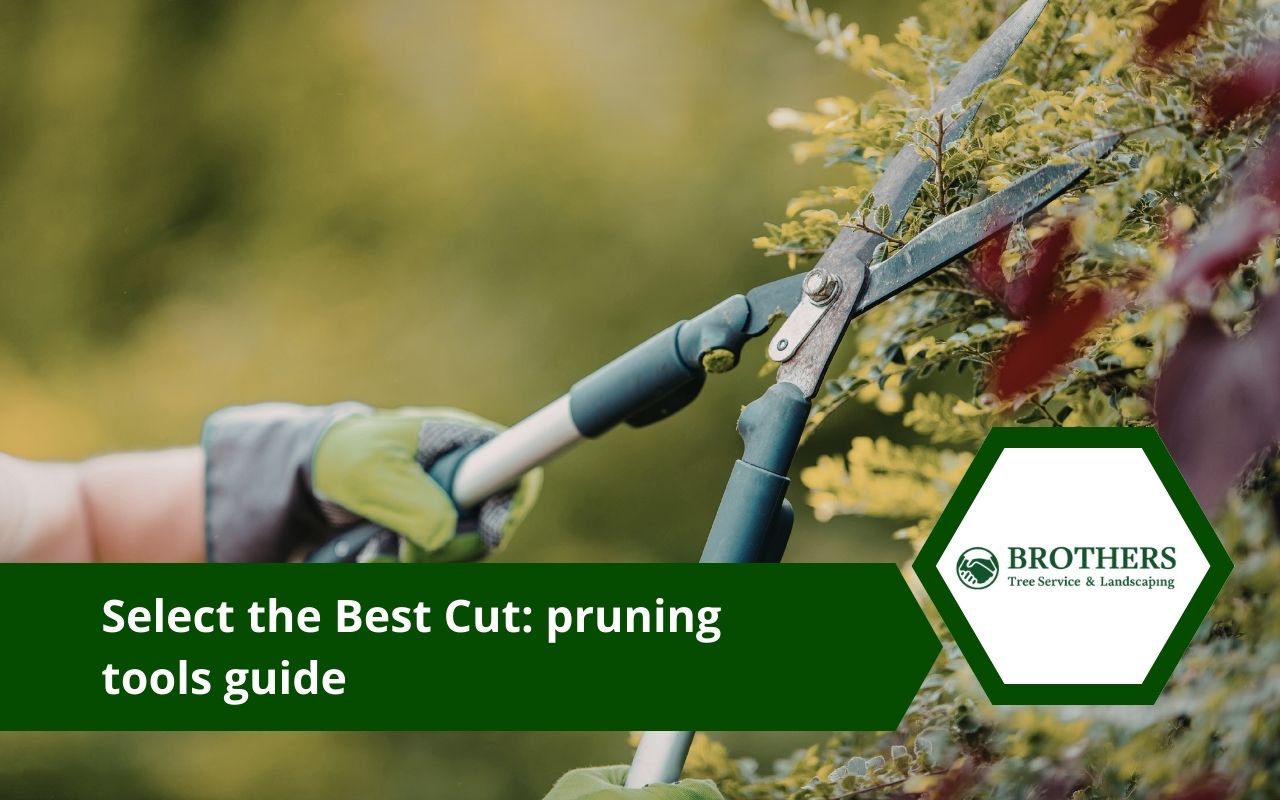
Selecting the right pruning tools can shape your whole garden experience. Therefore, the right pick can turn a hard job into an easy win. In this pruning tools guide, you’ll compare key options and choose tools that fit your tasks. As a result, you save time, protect plants, and feel more confident outdoors.
Brothers Tree service & Landscaping often sees people struggle with overgrown branches or thick shrubs. However, with the right tool in hand, work feels simpler and more satisfying. Whether you are new or experienced, you can match each tool to each cut and get cleaner results.
Hand pruners vs loppers: What makes them different?
In many yards, Brothers Tree service & Landscaping recommends understanding how tool size changes your cut. Hand pruners fit in one hand and work well on small stems and soft shoots. Meanwhile, loppers use longer handles to add power for thicker branches. Because each tool has a clear job, choosing well supports healthier plants.
- Hand pruners: best for small, close-up cuts.
- Loppers: better for thicker wood and extra reach.
- Choose based on branch size, control, and comfort.
Hand pruners usually come in two common styles. First, bypass blades cut like scissors for cleaner cuts on living stems. Second, anvil blades press the branch against a flat side, which can crush soft growth. Likewise, loppers can use similar blade styles, but their long handles add leverage and reduce effort.
Choosing the right tool for each task
To choose wisely, start with branch thickness, reach, and accuracy. For small flowers and fruit spurs, hand pruners help you work with care. On the other hand, thicker stems often need loppers for more force. If you want helpful examples from Brothers Tree service & Landscaping, explore expert tree pruning tips, which explains how clean cuts support strong growth.
- Thin stems: use hand pruners for clean control.
- Medium branches: use loppers for leverage and comfort.
- High limbs: consider a pole saw for safe reach.
Also, comfort matters. For example, ergonomic grips can reduce hand tiredness during long sessions. Similarly, ratcheting loppers can help if you have less grip strength. As you plan each job, consider reach, blade type, and ease of use. That way, you protect your hands and your plants.
Hand pruners made simple
Hand pruners are compact tools built for detail work. Usually, they have a spring that reopens the handles after each cut. As a result, you can trim quickly without constant reset. Many people choose bypass models for living stems, while anvil models work better on dry or dead wood. In this pruning tools guide, Brothers Tree service & Landscaping suggests picking the style that matches what you cut most often.
In addition, blade metal can affect durability. High-carbon steel often holds an edge longer, while stainless steel can resist rust. Rubber grips and shock bumps also help reduce strain. Finally, a good lock keeps blades closed for safer storage. With steady care, these tools can last for years.
Using loppers with better control
Loppers work best when you use your body, not just your wrists. So, stand with feet apart and hold the handles near the ends for full leverage. Then, make a smooth cut instead of forcing the blades. If the branch fights back, reopen and adjust your angle. This keeps the tool safer and protects the wood from tearing.
- Keep your stance stable before cutting.
- Aim for steady pressure, not quick force.
- Stop and adjust if the cut binds.
Some loppers include a step-by-step cutting feature that adds power over several squeezes. Therefore, tough wood becomes easier to handle. When Brothers Tree service & Landscaping shapes shrubs, they often use this style for stubborn growth, because it reduces fatigue and supports cleaner cuts.
when to use pole saws for safe reach
Knowing when to use pole saws helps you cut high limbs without climbing. A pole saw has an extendable pole and a small cutting head. Therefore, you can prune tall areas from the ground with more control. Still, keep both hands on the grips and stand on solid ground. If you want more shrub-focused guidance, read how to trim evergreen shrubs for a healthier garden.
Use a pole saw when branches are above lopper reach, or when dense growth blocks light overhead. However, avoid cutting near power lines unless you are trained and your local rules allow it. When safety is the goal, taking the extra step to plan the cut is always worth it.
Safety tips for pruning sessions
Safety should guide every cut, especially with sharp blades. So, wear snug gloves, eye protection, and sturdy shoes. If you use a pole saw, add a hard hat for falling debris. Before you start, check for loose bolts, dull blades, or cracked handles. In this pruning tools guide, Brothers Tree service & Landscaping emphasizes using the right tool instead of forcing a wrong one.
Also, keep kids and pets away from your work area. Then, focus on each cut and avoid distractions. If a branch is too thick, cut it in smaller parts. That approach lowers risk and protects your tools.
Maintaining tools so they last longer
Tool care prevents rust and helps avoid spreading plant problems. After each use, wipe blades clean and dry them well. Then, add a thin coat of oil to keep parts moving smoothly. Also, remove sticky sap when you can, because buildup can slow the cut. For more trimming basics, see essential bush trimming tools for every gardener.
Sharpening also matters. Use a flat file and follow the blade’s original angle. Afterward, test a cut on a scrap branch to confirm a smooth bite. With regular cleaning and sharpening, your tools stay reliable and easier to use.
Upgrading your tool set with smart options
If you want easier work, consider specialty tools that match your yard. For example, micro pruners help with detailed shaping on small plants. Gear-driven loppers can add force without extra weight. In addition, battery-powered tools can speed up larger jobs while reducing noise. Brothers Tree service & Landscaping often suggests upgrading when you prune often and want more comfort.
Still, buy tools based on real tasks, not trends. Therefore, focus on fit, balance, and blade quality. A smaller set of well-made tools often beats a big set you rarely use.
Frequently Asked Questions
How do I pick between hand pruners and loppers?
Choose hand pruners for small stems and close detail. Choose loppers for thicker branches that need more power and reach.
What is the cleanest blade style for living stems?
Bypass blades usually make cleaner cuts on living growth. Therefore, they can support faster healing in many plants.
How high is too high for loppers?
If the branch is above your safe reach, use a pole saw instead. This helps you stay on the ground and reduce risk.
How often should I clean and oil pruning tools?
Clean after each session, then oil lightly. As a result, parts move smoothly and rust is less likely.
When should I call a pro for pruning?
If branches are large, near lines, or hard to access, call Brothers Tree service & Landscaping. You can reach the team through the contact page.
Conclusion
This pruning tools guide helps you match the right tool to the right cut. From hand pruners vs loppers to knowing when to use pole saws, each choice supports safer work and healthier plants. Therefore, keep your tools clean, sharpened, and ready. If you want expert help in your yard, Brothers Tree service & Landscaping is only a message away.