
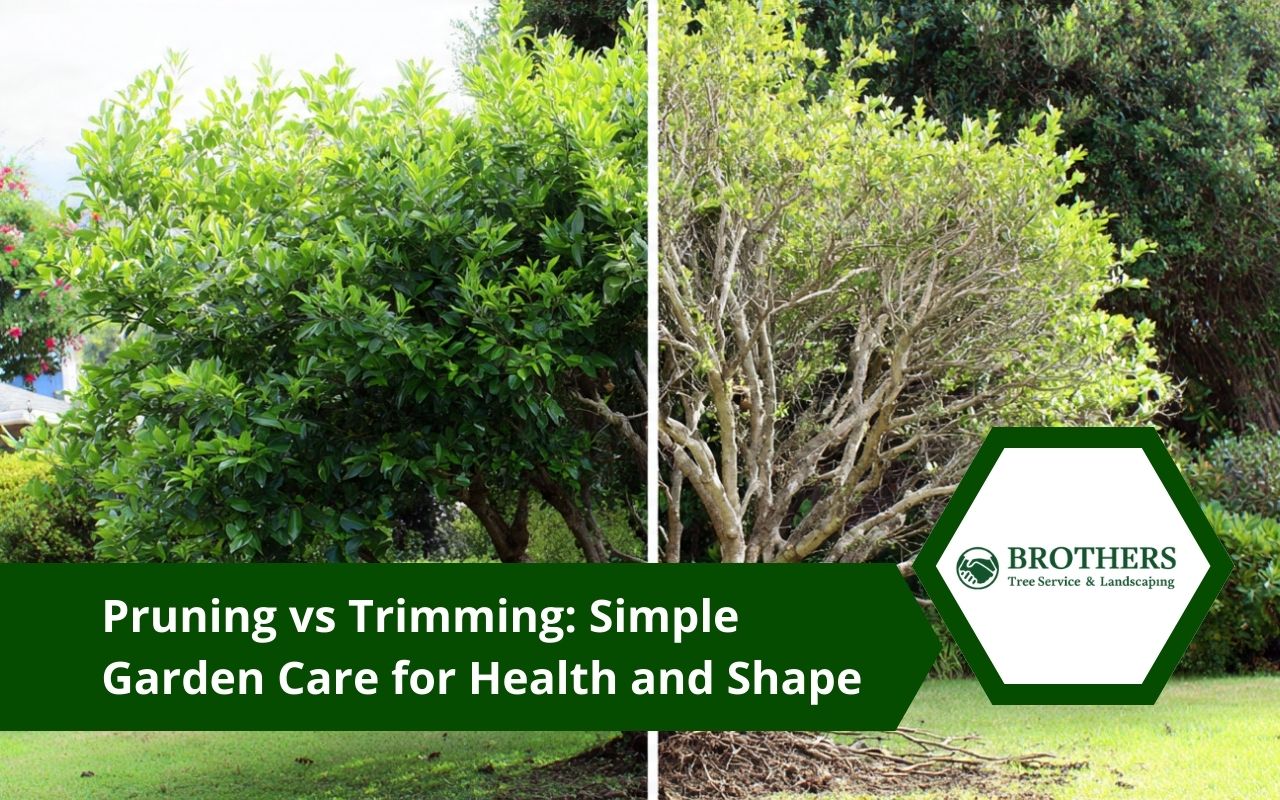
Differentiate: Pruning vs Trimming in Garden Craftsmanship. Explore the world of garden expertise, where precision meets creativity, and discover the subtle art of pruning vs trimming. Gardening is not just about planting; instead, it is about shaping a living masterpiece. Yet, how often do we pause to consider the tools and techniques that help our gardens flourish?
Pruning and trimming are two such techniques, each with its distinct purpose and style. Whether it’s for maintaining shape or supporting plant strength, understanding these methods can transform your garden into a lush haven with Brothers Tree service & Landscaping. Delve into the nuances that define the difference between structural pruning and trimming for shape.
Pruning basics: build stronger plants over time
The art of pruning focuses on plant health and long-term strength. When you prune, you cut away dead or crowded limbs so light and air can reach inner areas. As a result, you lower disease risk and guide new growth in better directions. With Brothers Tree service & Landscaping, smart cuts help trees and shrubs stay strong.
- Remove dead, weak, or rubbing branches first.
- Open the canopy so air and light move through.
- Guide growth to support a stable plant frame.
When comparing pruning vs trimming, pruning targets the plant’s “bones,” not just the surface. Therefore, it can shape the plant for years, not just weeks. For a deeper walkthrough, explore our tree pruning techniques guide.
Tools that make cleaner cuts and safer work
Having the right tools makes each cut smoother and safer. For example, sharp bypass pruners handle small branches, while loppers help with thicker limbs. Meanwhile, a pruning saw works best on larger branches. Brothers Tree service & Landscaping recommends clean tools because they reduce damage and speed healing.
- Bypass pruners for small stems and twigs.
- Loppers for medium branches and reach.
- Pruning saw for thick limbs and tight angles.
Also, keep blades clean with rubbing alcohol, and sharpen them often. Consequently, you get neat cuts and fewer plant problems. In addition, comfortable grips reduce strain during longer sessions.
Structural pruning: shaping a safe, lasting framework
Structural pruning helps young trees and shrubs grow with balance. First, aim for a strong main leader on trees, or clear main stems on shrubs. Next, remove crossing branches that create weak points. Brothers Tree service & Landscaping often starts with the “three D’s”: dead, diseased, and damaged wood.
- Choose the best main leader and support branches.
- Remove crossing limbs to prevent future breaks.
- Cut near the branch collar to help sealing.
Step back often to check your progress. Then, adjust slowly so the shape stays even. Since structure matters, these cuts support safer growth for the long run.
When to prune: match cuts to the plant’s season
Timing changes results, so it helps to cut with the plant’s growth cycle. Spring bloomers often need pruning right after they flower. However, summer bloomers usually respond well to late winter or early spring cuts. Deciduous trees often do best in late winter before active growth starts.
Meanwhile, evergreens may handle light summer shaping. Still, avoid heavy cutting in extreme heat or cold. As a result, plants recover faster and stay less stressed. If you are unsure what your trees need, Brothers Tree service & Landscaping can guide the right seasonal plan.
Trimming basics: keep a tidy look and clear lines
The craft of trimming focuses on visual neatness and quick control. Trimming removes small, extra growth and refines edges, which helps plants look clean. Unlike bigger health cuts, trimming for shape targets the outer layer and fine details. Brothers Tree service & Landscaping uses careful, even strokes to keep natural form.
In pruning vs trimming, trimming is often the “polish” step after structure work. Therefore, it supports a neat yard while encouraging fuller foliage. To learn more about why it matters, read our guide on why trimming trees helps.
How to trim shrubs for balance and light
Start by picturing the final shape before you cut. Then, trim small amounts and step back often to check symmetry. Additionally, keep shrubs slightly wider at the base so sunlight reaches lower branches. This approach supports healthier leaves and fewer bare spots.
- Trim gradually and review from several angles.
- Taper the top slightly so lower branches get light.
- Use light, even passes for a smooth finish.
Since regular light trimming reduces overgrowth, you avoid sudden heavy cuts later. For ongoing yard care, Brothers Tree service & Landscaping can help keep your shrubs consistent.
Pruning and trimming together: a simple yearly routine
Balancing both methods keeps plants healthy and attractive. First, plan one main pruning session to fix bigger issues and improve structure. Then, follow with small trims to keep edges neat. This steady rhythm supports strong growth without sudden stress.
- Start the year with structure-focused cuts.
- Trim lightly to maintain clean borders.
- Pause if plants slow down and need recovery.
In pruning vs trimming, the best results come from using each at the right time. If you want help planning your schedule, see the advantages of hiring pros in our guide on tree service benefits.
Common mistakes that weaken plants
Over-cutting is one of the biggest errors. For example, removing more than about a third of a plant at once can cause stress. Also, poor cut placement can invite pests and rot. Instead, make clean cuts just above a bud or near the branch collar.
Avoid trimming during harsh weather, too. Consequently, wounds may heal slowly and problems can spread. Brothers Tree service & Landscaping recommends steady, planned care rather than rushed cuts.
Frequently Asked Questions
What is the main difference in pruning vs trimming?
Pruning improves plant health and structure, while trimming focuses on neat shape and quick control.
When should I use structural pruning?
Use it to build strong branch spacing, especially on young trees and shrubs that need a stable frame.
Is trimming for shape bad for trees?
No, as long as it is light and does not remove major limbs that the tree needs for balance.
How do I know if I cut too much?
If the plant looks thin or growth slows for weeks, you likely removed too much at once.
Should I hire Brothers Tree service & Landscaping for this work?
Yes, especially for tall trees or safety concerns, since trained crews cut cleanly and reduce risk.
Conclusion: healthier plants and better curb appeal
Understanding pruning vs trimming helps you care for plants with more confidence. Pruning builds a strong framework through thoughtful cuts, while trimming keeps plants neat and shaped. Together, they support both health and beauty, season after season, with Brothers Tree service & Landscaping.
If you want a plan tailored to your yard, reach out through our contact page to discuss your trees and shrubs.