
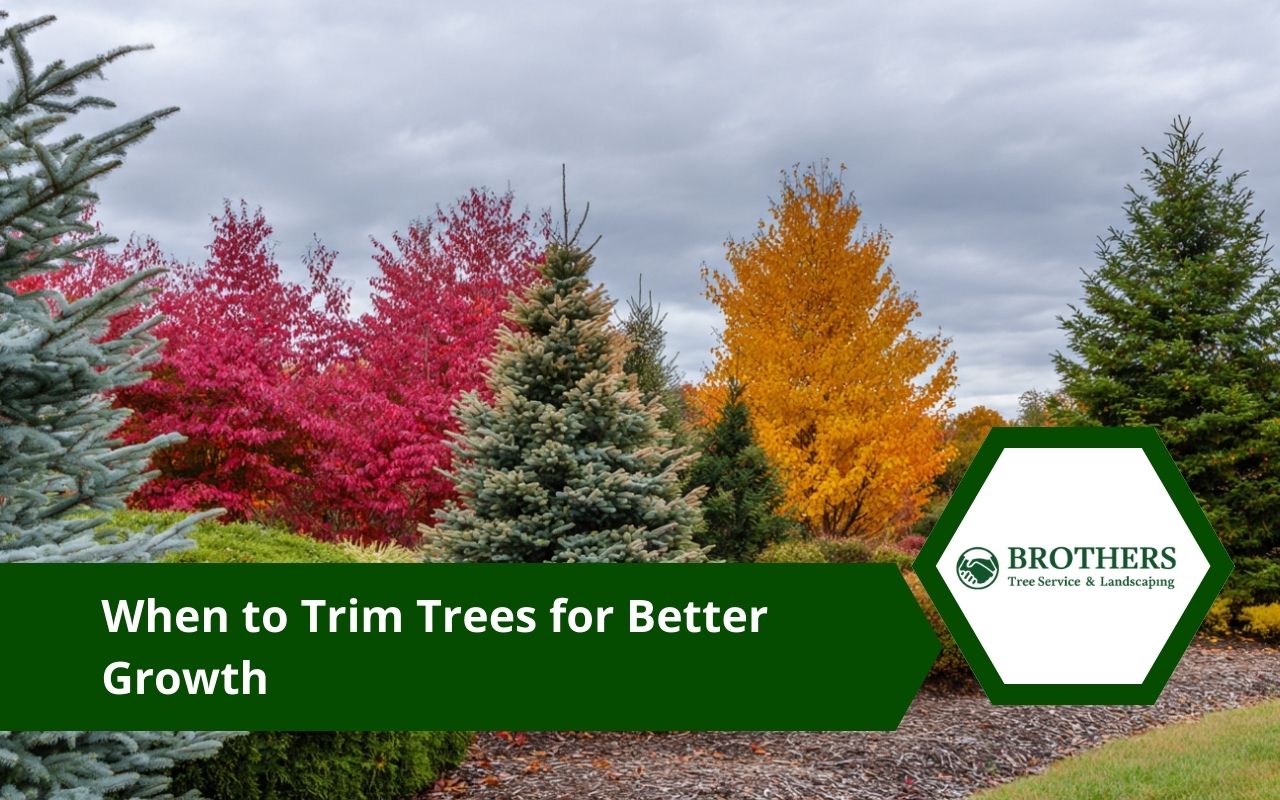
Understand when to trim trees for best growth results. First, remove confusion by focusing on timing, not only tools or methods. Brothers Tree service & Landscaping explains how the right moment supports strong, healthy trees.
Moreover, seasonal tree trimming shapes growth and long-term strength. Therefore, learning the best timing can turn small saplings into lasting landscape highlights. This guide shares simple steps that help your trees thrive.
The Value of Timing in Tree Trimming
Knowing the link between timing and health is key for any homeowner. In fact, seasonal tree trimming does more than shape branches. It also affects sap flow, healing, and pest risk.
So, when to trim trees matters because poor timing can expose fresh cuts to weather or insects. Brothers Tree service & Landscaping recommends matching cuts to each tree’s growth cycle. As a result, you get better blooms, stronger limbs, and fewer future fixes.
- Healthier healing and less stress
- Lower risk of pests and disease
- Better structure and safer limbs
Season-by-Season Guide for Tree Trimming
Spring: A Smart Time for Many Trees
Early spring often works well because trees are near wake-up time. Also, you can see the branch layout before leaves appear. Therefore, shaping and thinning feels simpler and more accurate.
For fruit trees, spring cuts can improve airflow and sunlight. As a result, harvest and fruit size may improve. Still, avoid heavy cutting, since too much removal can slow growth.
Summer: Useful, but Use Care
Summer pruning lets you see full leaves, which helps spot sick limbs. Also, mid-to-late summer cuts often cause fewer fast shoots. Therefore, crowns can stay more controlled.
However, heat and dry weather can raise stress. So, keep summer cuts light and focus on safety or disease. Avoid major shaping until cooler conditions return.
Fall: Light Work and Storm Prep
Fall trimming can remove weak or sick wood before winter. However, cuts may heal slower as growth slows down. Therefore, focus on deadwood and small fixes instead of big shaping.
Also, clearing risky limbs can reduce damage during storms. Even so, use clean tools after sick cuts to limit spread.
Winter: Clear Views During Dormancy
Winter pruning offers clear views because leaves are gone. Also, sap flow is slower, so cuts may bleed less. As a result, many shade trees respond well to careful winter trimming.
Still, avoid cutting during deep freezes, since wood can crack. Instead, choose a mild day and keep tools clean for safer results.
- Spring: clear structure and strong growth support
- Summer: targeted cleanup and control
- Fall: light safety work and storm readiness
- Winter: easy structure review and shaping
Signs Your Tree Needs Trimming
Regular checks help you act before problems grow. For example, dead limbs, cracks, or peeling bark can signal trouble. Also, rubbing branches can create wounds that invite pests.
Look for uneven canopies that lean growth to one side. Moreover, many sprouts at the base can pull energy away from healthy limbs. In those cases, Brothers Tree service & Landscaping suggests quick, careful cleanup.
- Dead or dying branches
- Branches rubbing or crossing
- Unbalanced canopy or heavy lean
- Too much inner shade and thinning
How to Trim Trees the Right Way
Good tools and simple methods matter a lot. First, use sharp shears, loppers, and a saw that fits the branch size. Also, clean tools between cuts, especially after sick wood.
Cut just outside the branch collar to support healing. For larger limbs, use a three-cut method to avoid bark tears. Additionally, skip wound paint, since trees seal cuts on their own over time.
To learn more, explore tree pruning techniques from Brothers Tree service & Landscaping. Also, review why trimming trees to connect timing with long-term results.
Common Mistakes to Avoid
Over-cutting is a top mistake. In fact, removing more than a quarter of the canopy can shock a tree. Therefore, plan gradual changes across seasons if big reshaping is needed.
Also, poor cuts can slow healing. For example, leaving stubs or cutting too close can raise disease risk. Moreover, dirty tools can spread problems from tree to tree.
Frequently Asked Questions
When to trim trees for the healthiest results?
In many cases, trim during dormancy or early spring. However, the best time depends on the species and local weather.
What does seasonal tree trimming mean?
It means planning cuts by season. Therefore, you work with natural growth cycles, not against them.
How do optimal trimming seasons affect pests?
Better timing can reduce exposure to insects and disease. As a result, cuts often heal with fewer issues.
Can I trim in summer without harming the tree?
Yes, but keep it light. Also, avoid heavy cuts during heat or drought to limit stress.
Should I hire an expert for large trees?
Often, yes. Large trees involve height, risk, and hidden damage, so a trained crew can help.
When to Call a Pro for Help
If you feel unsure, expert help can save time and prevent damage. Brothers Tree service & Landscaping can build a plan based on your tree type, age, and yard needs. Also, pros bring the right gear and safe work habits.
For an on-site plan and clear next steps, use the contact page: contact Brothers Tree service & Landscaping. In addition, if you are still deciding when to trim trees, a quick visit can align your schedule with your goals.
Maximizing Growth With Smart Trimming
Timing matters as much as the cut itself. Therefore, use seasonal tree trimming to support strong limbs and fewer risks. With better timing and clean cuts, your landscape stays safer and healthier.
Most importantly, when to trim trees becomes simple when you follow nature’s rhythm. Brothers Tree service & Landscaping can help you choose optimal trimming seasons and keep your trees thriving year after year.