
Tree trimming safety can feel overwhelming, especially when safety is at risk. Every year, accidents happen because tree trimming hazards get missed. If you’ve felt nervous under a tall tree with a saw, you’re not alone.
However, knowing the risks and keeping a safe trimming distance can protect you and others. With the right habits, this job becomes more controlled and secure. Before you start, learn the essential rules that reduce risk.
Understanding Tree Trimming Hazards
At Brothers Tree Service & Landscaping, we remind homeowners that tree trimming hazards are not only falling branches. Hidden problems like rot, weak limbs, and sudden shifts can drop heavy debris fast.
Therefore, inspect the tree for cracks, fungi, and deadwood before the first cut. Also, check the ground for rocks and uneven spots. Finally, plan where debris may land so you support tree trimming safety from the start.
- Look for dead or hanging limbs before you work.
- Watch for rot, splits, and hollow areas in the trunk.
- Expect branches to swing if the cut angle is off.
Why the Right Equipment Matters
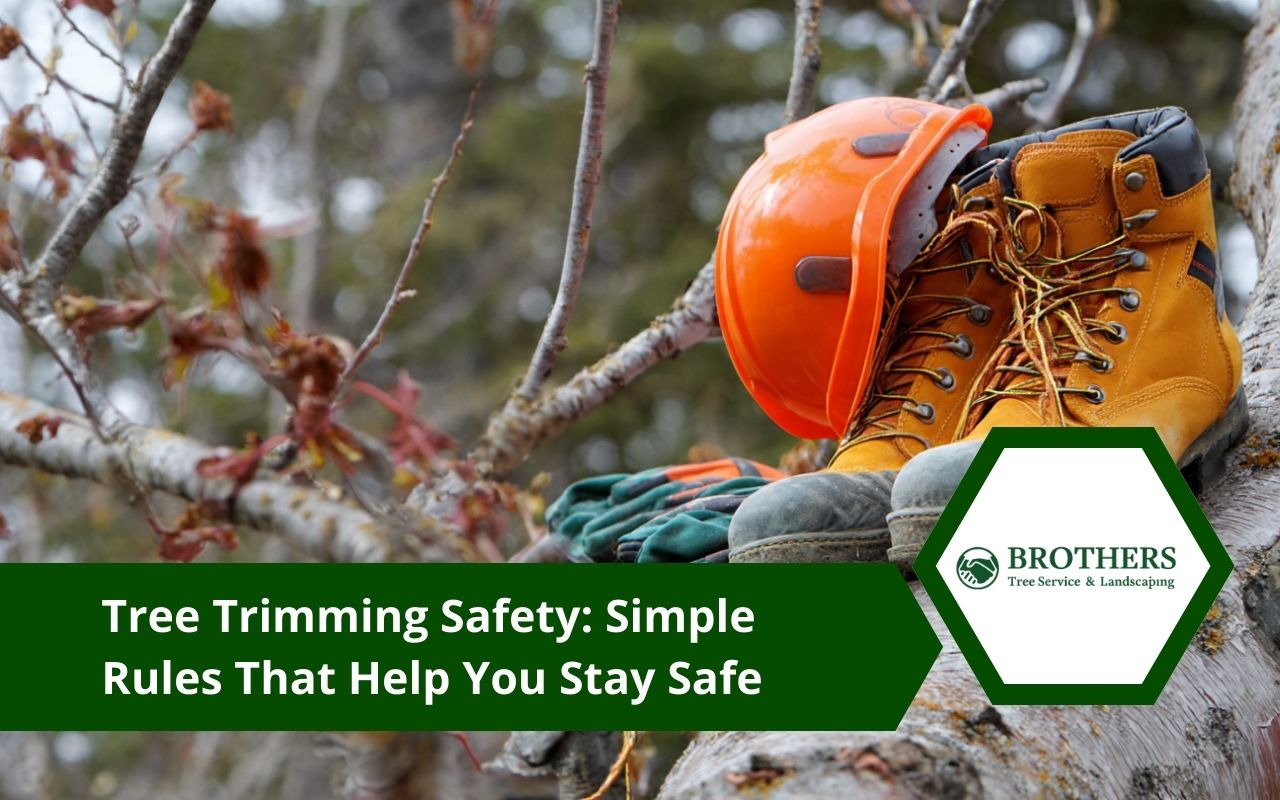
Tree trimming safety improves when you wear and use the right gear. A helmet and face shield help against chips. Gloves and steel-toed boots reduce cuts and crush injuries. Ear protection also matters when power tools are used.
In addition, match tools to the job. Use a sharp hand saw for small limbs. Use a chainsaw with the right bar length for larger cuts. If you work at height, use a harness or rope, and check everything first.
- Helmet with face shield, gloves, and steel-toed boots
- Hearing protection for extended tool use
- Well-maintained saws, ropes, and ladders
Pre-Trimming Safety Checks
Before you begin, Brothers Tree Service & Landscaping recommends quick checks to prevent surprises. Walk the area and note loose limbs, ground hazards, and changing weather. Also, confirm your ladder is stable and your ropes are not frayed.
Next, plan each cut so you know where the branch should fall. This helps tree trimming safety and keeps your exit path clear. Moreover, check wind direction so debris does not move toward people or property.
Establish a Safe Trimming Zone
A clear boundary supports tree trimming safety for everyone nearby. Mark the work area with cones, flags, or caution tape. Then, tell helpers and neighbors to stay behind the line.
Also, keep tools and cords organized to prevent trips. Stand upwind when possible. Most importantly, maintain a safe trimming distance from the tree and from coworkers, because falling wood can travel farther than expected.
- Mark a perimeter with tape, cones, or flags.
- Create an escape route before you cut.
- Keep bystanders out and tools tidy.
Techniques for Safe Branch Removal
Good cutting habits reduce tree trimming hazards and support tree trimming safety. For larger limbs, start with an undercut to prevent bark tearing. Then make a top cut slightly farther out so the branch drops cleanly.
Meanwhile, keep your tool at a comfortable angle to reduce fatigue. For high limbs, use a pole saw instead of leaning off a ladder. Apply steady pressure and let the tool work, which helps prevent slips.
Handling Overhanging Branches with Care
Overhanging limbs need extra control. To reduce tree trimming hazards, tie a rope near the end of the branch and anchor it to a solid point. This helps prevent sudden drops that can hurt people or damage roofs and fences.
Additionally, cut in smaller sections from the tip inward. This lowers weight gradually and keeps movement predictable. Even then, keep a safe trimming distance, because tension can change quickly during the cut.
Working Around Power Lines
Keep at least 10 feet away from power lines at all times. Electricity can arc through the air, so even near misses can be dangerous. If a branch or tool touches a line, the risk of electrocution is severe.
Therefore, if the job involves wires, contact the utility company or hire a trained crew. When in doubt, Brothers Tree Service & Landscaping can help you plan a safer option that supports tree trimming safety without guesswork.
First Aid Basics for Tree Trimming
Even with planning, accidents can happen. Keep a stocked first aid kit close, including gauze, bandages, antiseptic wipes, and a tourniquet. Also, keep a charged phone nearby and know the fastest route to medical care.
Moreover, work with a spotter when possible. A second person can call for help and guide you if you are injured. This simple step can reduce the impact of common tree trimming hazards.
When to Call a Professional
Some jobs exceed DIY limits. If a tree leans, shows major rot, or sits close to power lines, a licensed professional is the safer choice. Attempting complex cuts increases tree trimming hazards and can put everyone at risk.
For help, explore the Brothers Tree Service & Landscaping resources on tree trimming safety tips. You can also review professional trimming tips to understand what trained crews do differently.
- Call a pro for large trees, unstable limbs, or storm damage.
- Choose licensed, insured help for higher-risk work.
- Use expert guidance when the plan feels uncertain.
Frequently Asked Questions
What is the biggest risk during tree trimming?
The biggest risk is uncontrolled falling limbs, especially when hidden rot or weak joints cause sudden breaks. Tree trimming hazards often appear after cutting begins, so planning matters.
How do I choose a safe trimming distance?
A safe trimming distance depends on branch size and where it could swing or bounce. As a rule, keep people well outside the drop zone and expand the boundary for heavy limbs.
Do I need special gear for small branches?
Yes. Even small cuts can throw chips and cause slips. Gloves, eye protection, and sturdy boots support tree trimming safety on any size job.
What should I do if branches are near my roof or fence?
Use ropes, cut smaller sections, and control the drop. If the risk still feels high, use a professional service to reduce property damage and tree trimming hazards.
Can I trim bushes the same way as trees?
The approach differs. Bushes usually involve lower risk, but you still need clean tools and stable footing. For timing and methods, see when to trim bushes.
Put Tree Trimming Safety First
Tree trimming safety means planning, wearing the right gear, and staying alert to tree trimming hazards. By setting a clear work zone, using proper cutting steps, and keeping a safe trimming distance, you reduce the chance of serious injuries.
If you want support with a risky tree or a hard-to-reach limb, contact Brothers Tree Service & Landscaping through our contact page. You can also reach us directly at request tree trimming help for a safer plan.