
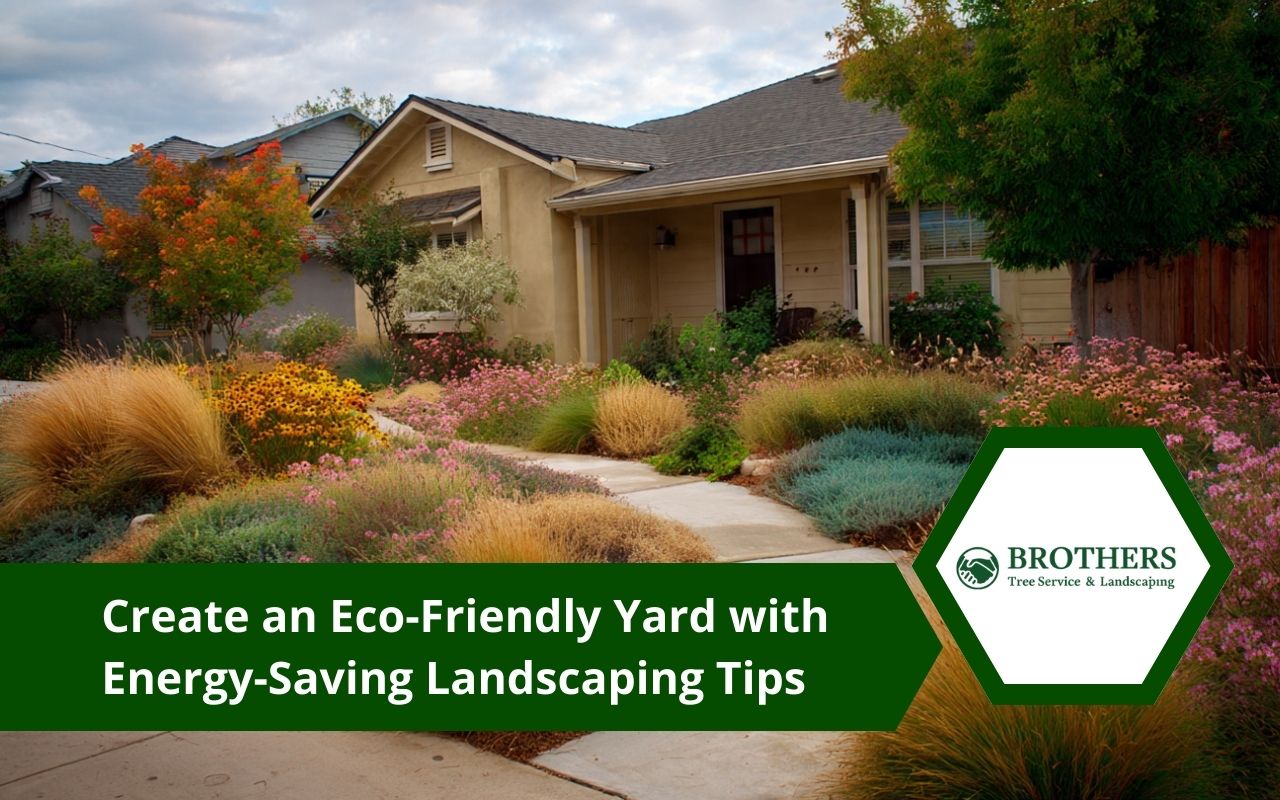
Step into the world of green living with simple changes to your outdoor space. If you’ve ever felt a twinge of guilt over your yard’s environmental impact, you’re not alone.
Energy-Saving Landscaping can reduce energy use and keep your property beautiful. With smart Shade trees placement and Windbreaks with shrubs, you can support comfort, water savings, and a healthier yard.
Choosing Native Plants for a Sustainable Yard
Native plants support Energy-Saving Landscaping because they need less water and fewer chemical treatments. Since they match your local climate and soil, they usually thrive with minimal help.
Choose wildflowers, grasses, and shrubs that naturally grow in your region. Also, group plants with similar water and light needs. This simple zoning keeps growth steady and reduces overwatering.
- Pick region-friendly wildflowers for long blooms
- Use native grasses for texture and low upkeep
- Add shrubs that attract birds and pollinators
Implementing Drought-Resistant Landscaping Techniques
Reducing water use is a key part of Energy-Saving Landscaping. Drought-resistant plants, mulch, and efficient watering systems help you conserve water while keeping plants healthy.
Try succulents, ornamental grasses, and deep-rooted perennials. Then, apply organic mulch to limit evaporation and keep soil moist longer. As a result, you rely less on sprinklers and pumped water.
- Use organic mulch to lock in moisture
- Choose deep-rooted perennials for dry seasons
- Install drip lines to water at the roots
Incorporating Rainwater Harvesting Systems
Rainwater harvesting lowers your reliance on treated water, which supports Energy-Saving Landscaping goals. Rain barrels and cisterns capture roof runoff and store it for later garden use.
Connect a rain barrel to a downspout and cover it to block debris and mosquitoes. For larger beds, consider a gravity-fed setup that makes watering easier while using less energy.
- Attach a rain barrel to a downspout
- Use a covered lid to keep water clean
- Pair multiple barrels for bigger gardens
Maximizing Natural Shade with Strategic Tree Planting
Shade trees placement can cool your home naturally and reduce air-conditioning needs. In Energy-Saving Landscaping, deciduous trees are a smart fit because they shade in summer and let sun in during winter.
Plant trees on the south and west sides to block harsh summer light. However, keep mature size in mind to avoid power lines and structures. With time, a healthy canopy can cool patios, walls, and walkways.
Using Shrubs as Windbreaks to Reduce Heat Loss
Windbreaks with shrubs can reduce cold winter winds around your home. This supports Energy-Saving Landscaping by lowering heat loss and making outdoor areas more comfortable.
Place dense shrubs along the side that faces strong winds, often the north or northwest. Also, leave enough space for airflow and maintenance. Over time, a layered shrub line can create a calmer microclimate.
Creating a Wildlife-Friendly Habitat in Your Yard
A wildlife-friendly yard supports a balanced ecosystem and reduces the need for harsh chemicals. Use flowering shrubs, native grasses, and small trees to offer nectar, seeds, and shelter.
Add a shallow water source like a birdbath near shrubs for quick cover. Instead of pesticides, try companion plants such as lavender or marigolds. As a result, helpful insects can manage pests naturally.
Using Permeable Paving to Reduce Runoff
Permeable paving helps rain soak into the ground instead of rushing into storm drains. This reduces runoff and supports healthier soil and groundwater recharge.
Options include porous concrete, permeable pavers, and gravel. With the right base layer, these surfaces filter sediment while staying stable for walking and driving.
Installing Energy-Efficient Outdoor Lighting
Outdoor lighting can boost safety and curb appeal, yet older fixtures waste energy. LEDs and low-voltage systems can cut power use, and solar path lights add convenience.
For a practical next step, explore ideas that match your layout and plantings in lighting ideas for front yard landscape. Then, use timers or motion sensors so lights run only when needed.
Frequently Asked Questions
1) What is Energy-Saving Landscaping?
Energy-Saving Landscaping uses plants and design choices that help reduce heating, cooling, and water needs around your home.
2) Where should shade trees be planted for the best results?
Shade trees placement usually works best on the south and west sides to block intense summer sun while still allowing winter light.
3) How do windbreak shrubs help lower energy use?
Windbreaks with shrubs can slow cold winds near your home, which can reduce heat loss and improve comfort in winter.
4) Do native plants really reduce maintenance?
Yes. Native plants are adapted to local conditions, so they often need less watering, fewer treatments, and less ongoing care.
5) How can I improve curb appeal while staying eco-friendly?
You can boost curb appeal with smart planting, lighting, and clean edging. For more ideas, see improving curb appeal and apply eco-friendly upgrades that fit your yard.
Maintaining Your Eco-Friendly Yard Year-Round
Seasonal care keeps Energy-Saving Landscaping working well through changing weather. In spring, refresh mulch and check irrigation lines for leaks. In summer, prune trees and shrubs to support airflow and healthy growth.
In autumn, compost fallen leaves to enrich soil. Then, clean gutters and rain barrels before winter rains. With steady care, your yard stays attractive, efficient, and resilient year after year.
Conclusion
Energy-Saving Landscaping helps reduce environmental impact while improving comfort and home value. From native plants to smart lighting, each step supports a greener outdoor space.
When you combine Shade trees placement and Windbreaks with shrubs, your landscape can work with nature to regulate temperature and reduce resource use. If you want expert help planning your next upgrade, reach out through the contact page.