
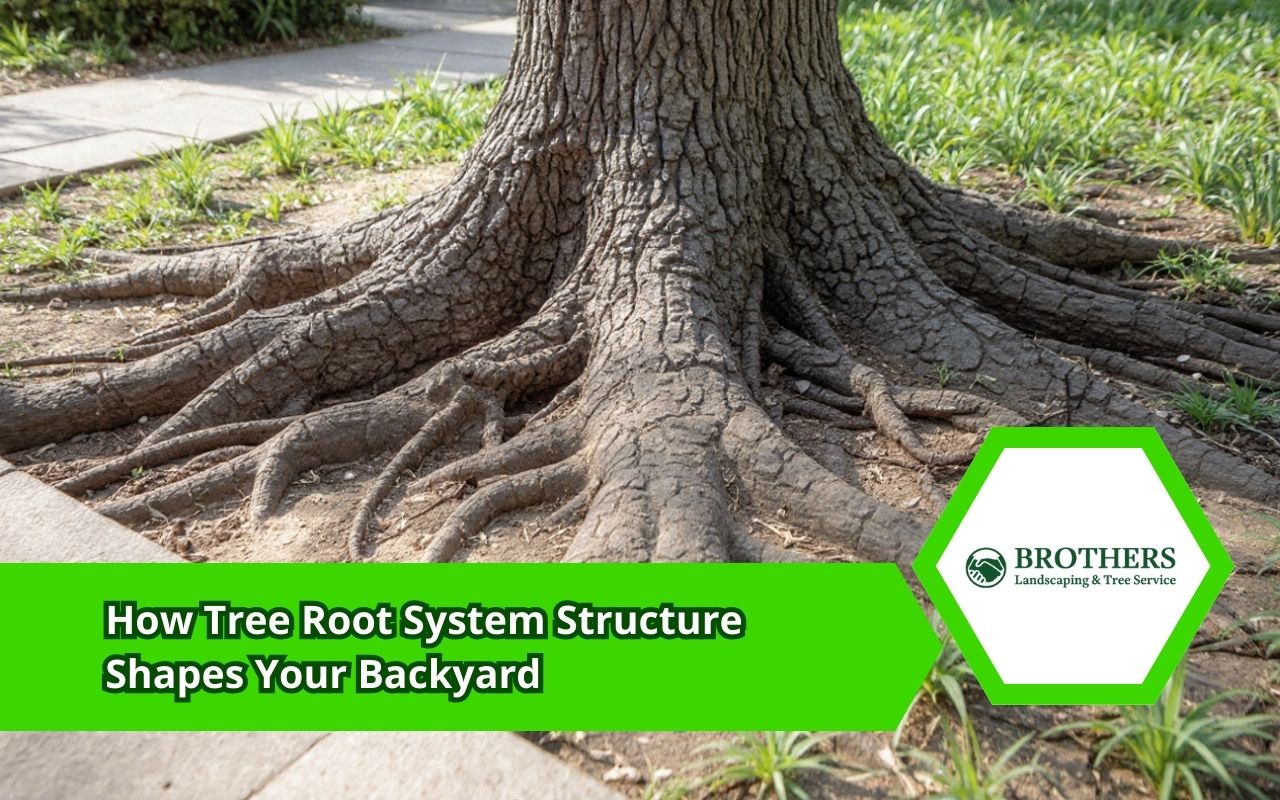
Explore how the tree root system structure impacts your backyard. Transform your understanding of landscaping by looking beneath the soil. Many homeowners overlook how roots guide the health and beauty of outdoor spaces. It is not only about what you see above ground. Roots are a vital system that can support, or disrupt, your garden.
Tree root system structure helps you plan better, especially when you plant new trees or manage mature ones. When you learn the types of tree root systems and how far tree roots spread, you can avoid property damage. A large oak can be stunning, yet its roots may reach far. On the other hand, the right tree can boost curb appeal and protect your landscape.
Why Tree Root System Structure Matters
Tree root system structure matters because it shapes how trees find water, hold soil, and absorb nutrients. When you understand root behavior, you can plant in smarter spots and select better species. Some trees grow deeper roots that reach water below. Others form shallow networks that spread near the surface. As a result, both patterns can affect soil stability, drainage, and plant health.
In addition, understanding tree root system structure helps you prevent conflicts with built areas. Roots can affect sidewalks, driveways, and foundations if placement is poor. However, with better planning you can lower the risk of cracks and shifting ground. If you want practical guidance that supports long-term tree health, review this tree care guide with proven tips and apply it to your yard.
Types of Tree Root Systems
Types of tree root systems vary by species, soil, and water access. Still, most patterns fit into a few common groups. When you learn these types, you can predict how your tree may behave over time. That makes it easier to plan lawns, beds, and hardscape features with fewer surprises.
- Taproot systems: often grow a main deep root, which can improve drought access.
- Fibrous root systems: spread many fine roots near the surface, which can stabilize soil.
- Heart-shaped systems: grow several strong roots that angle down and out for balance.
- Surface root systems: expand close to the top layer, which can affect paving and turf.
How Far Tree Roots Spread
How far tree roots spread depends on tree size, soil texture, moisture, and nearby barriers. Roots often extend beyond the canopy edge because they search for water and oxygen. Because of that, even healthy trees can reach into lawns, beds, and utility areas. If you plan with this in mind, you can reduce stress on the tree and avoid damage to nearby features.
- Roots may extend well past the drip line, especially in compacted or dry soil.
- Most feeder roots stay in the top soil layer where oxygen is higher.
- Hard surfaces and shallow soil can push roots outward rather than down.
- Consistent deep watering can encourage deeper, steadier growth patterns.
How Roots Affect Backyard Landscaping
Tree root system structure can shape the success of your landscape design. Roots compete for water and nutrients, so planting delicate shrubs too close can limit growth. Also, large roots may lift pavers, crack concrete, or disturb pipes. Therefore, knowing root zones helps you place garden beds and hardscape where they will last longer.
When you want design ideas that work with trees instead of against them, explore these tree and landscaping inspiration ideas. They can help you plan patios, pathways, and planting areas while protecting root space.
- Keep heavy hardscape outside active feeder-root zones when possible.
- Choose companion plants with similar water needs to reduce competition.
- Use permeable surfaces where roots need air and water access.
- Leave open soil areas where roots naturally spread and recharge.
Choosing Trees That Fit Your Space
Choosing the right tree starts with matching tree root system structure to your yard. Near sidewalks or driveways, avoid species with aggressive surface roots. Instead, look for trees known for steadier root habits. In smaller yards, compact trees often have less sprawling roots, which can reduce conflicts with nearby features.
Soil also changes root behavior. Sandy soil can allow deeper growth, while clay can hold water and limit oxygen. As a result, roots may stay closer to the surface in heavy clay. If pruning is part of your plan, use guidance that supports both canopy balance and below-ground health. For best results, follow these expert tree pruning tips so your maintenance supports long-term stability.
Signs of Tree Root Problems
Spotting root issues early can prevent expensive repairs and protect tree health. One sign is pavement that cracks or lifts around a tree. Another sign is pooling water, which may point to blocked drainage. Also, sunken lawn patches can appear when roots die back. When you act early, you protect both your property and your trees.
- Cracked or raised sidewalks, patios, or driveway edges near the trunk.
- Water pooling in one area, especially after moderate rain.
- Thinning canopy, yellow leaves, or branch dieback during the growing season.
- Exposed roots that look dry, brittle, or repeatedly damaged.
How to Reduce Root Damage to Property
Reducing risk starts with smart spacing and gentle root management. Root barriers can guide roots away from pipes and foundations. Also, improving soil conditions can encourage healthier, deeper growth patterns. However, heavy cutting can stress trees, so careful methods matter. When the situation is complex, professional help can be the safest option.
- Install root barriers to redirect roots away from sensitive areas.
- Aerate compacted soil to improve oxygen and water movement.
- Use mulch to protect surface roots and stabilize moisture levels.
- Prune roots carefully, and avoid cutting large structural roots when possible.
Best Practices for Planting Trees
Planting correctly helps prevent future root problems. Place the root flare at soil level to avoid rot and poor oxygen flow. Also, dig a hole wider than the root ball so roots can expand easily. After planting, mulch helps retain moisture, yet keep mulch off the trunk to reduce decay risk. With steady care, roots establish more safely.
In addition, water young trees deeply but less often. This supports downward growth rather than surface spreading. Avoid excess nitrogen, since fast top growth can outpace root strength. When you build these habits early, your landscape becomes easier to manage over time.
Frequently Asked Questions
What is tree root system structure?
Tree root system structure is the way roots grow, spread, and support a tree. It influences stability, water uptake, and nutrient flow.
Why do some tree roots stay near the surface?
Many roots stay near the surface because oxygen levels are higher there. Soil type and compaction can also limit deeper growth.
How far tree roots spread in a typical yard?
How far tree roots spread depends on the species and soil. Roots often extend beyond the canopy, especially where water is limited.
Can roots damage sidewalks and foundations?
Yes, roots can lift pavement or exploit weak spots near structures. Proper spacing and planning lowers the risk.
What’s the safest way to manage root conflicts?
Start with prevention through smart planting. If issues exist, use barriers, improve soil health, and consult an arborist for major conflicts.
Using Root Knowledge to Improve Your Backyard
When you understand tree root system structure, you can design a backyard that stays healthy and easier to maintain. By learning the types of tree root systems and how far tree roots spread, you can choose better trees and safer planting locations. That way, you avoid costly repairs and protect nearby plants.
With good planting, balanced watering, and soil care, roots anchor trees without creating problems. Tree root system structure becomes a planning tool, not a hidden risk. As a result, your backyard can grow into a balanced space where trees, plants, and pathways work together.