
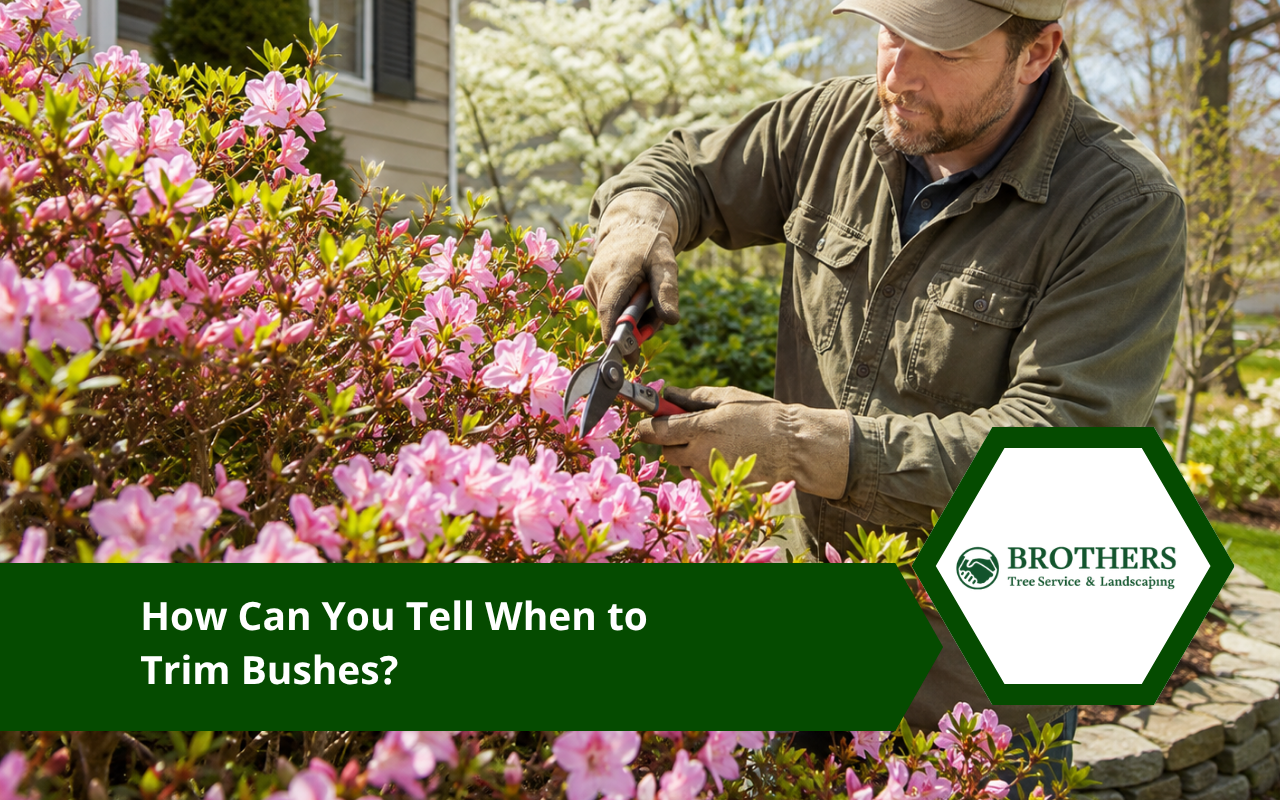
The right trimming time depends on when the shrub flowers, its current condition, and the type of growth it produces. Spring-flowering bushes generally need trimming after blooming. Many summer-flowering shrubs can be trimmed during late winter or early spring. Dead, broken, or hazardous branches may require attention whenever they appear.
Understanding when to trim bushes helps protect flower buds, control overgrowth, and encourage healthier structure. Brothers Tree Service & Landscaping provides professional bush trimming assistance for properties in Belfair, WA and nearby communities.
What Is the Best Time to Trim Bushes?
The best time to trim bushes depends largely on their flowering schedule. Trimming every shrub during the same month can remove developing buds or encourage new growth at an unsuitable time.
Late winter and early spring often provide a useful trimming window for non-flowering shrubs and plants that bloom on new growth. However, spring-flowering shrubs usually develop buds on older branches. Therefore, they should generally be trimmed after their flowers fade.
| Shrub Condition | Recommended Timing | Trimming Goal | Main Risk |
|---|---|---|---|
| Spring-flowering shrub | Shortly after flowering | Shape growth without removing future blooms | Cutting flower buds before they open |
| Summer-flowering shrub | Late winter or early spring | Support new flowering growth | Trimming after new growth has developed |
| Evergreen shrub | Late spring or early summer | Maintain density and natural shape | Cutting into areas that may not regrow |
| Dead or damaged branches | As soon as safely practical | Remove unsafe or unhealthy material | Allowing damage to worsen |
| Severely overgrown shrub | Based on species and condition | Restore structure gradually | Removing too much healthy growth at once |
Should You Trim Bushes in Fall?
Fall bush trimming should usually remain limited to dead, broken, diseased, or hazardous material. Heavy trimming may stimulate tender new growth that cannot harden before colder weather arrives.
Removing too much foliage in fall can also reduce the plant’s natural winter protection. If a healthy shrub only looks untidy, waiting until the correct seasonal window may produce better results.
Review our guide to cutting back shrubs in fall before making substantial seasonal changes.
When Should Flowering Bushes Be Trimmed?
Flowering time provides one of the clearest trimming clues. Bushes that bloom early in spring often produce flowers from buds formed during the previous growing season. Trimming them before flowering may remove those buds.
Shrubs that bloom later may produce flowers on new growth. These plants can often be trimmed before spring growth begins. However, timing varies by species, so identify the plant before removing major branches.
- Spring bloomers: Trim shortly after the flowers fade.
- Summer bloomers: Consider trimming during late winter or early spring.
- Repeat bloomers: Remove faded flowers and make light shaping cuts when needed.
- Unknown shrubs: Wait until the flowering cycle is identified.
How Often Should Evergreen Bushes Be Trimmed?
Evergreen shrubs usually benefit from light, selective trimming rather than severe cutting. Late spring or early summer often allows new growth to mature before colder weather.
Follow the shrub’s natural shape instead of creating an excessively flat or narrow surface. Avoid cutting deeply into bare interior wood unless the species is known to regrow from that area.
Signs Your Bushes Need Professional Trimming
Seasonal timing matters, but the plant’s condition is equally important. A qualified bush trimming service can help when the shrub has structural problems or requires more than routine shaping.
Use this checklist to identify concerns:
- Dead, split, rubbing, or broken branches
- Branches blocking windows, entrances, or walkways
- Dense growth restricting light and airflow
- Shrubs leaning or growing heavily toward one side
- Repeated cutting that has created a thin outer shell
- Branches touching the roof, siding, or utility equipment
- Flowering that has declined without an obvious cause
- Overgrown shrubs requiring substantial size reduction
Which Bush Trimming Tools Should You Use?
The cutting tool should match the branch size and trimming goal. Hand pruners work for smaller stems, while loppers provide leverage for thicker branches. Hedge shears are designed for light surface shaping rather than removing large woody growth.
Clean and sharpen tools before use. Dull blades may crush stems and create uneven cuts. Learn more about essential bush trimming tools before beginning routine maintenance.
- Hand pruners: Small stems and precise corrective cuts
- Loppers: Moderately thick branches within easy reach
- Pruning saw: Larger woody branches requiring controlled cuts
- Hedge shears: Light shaping of suitable hedge surfaces
Mistakes That Can Damage Healthy Shrubs
Removing excessive growth in one visit can stress a shrub and expose interior branches. Repeatedly cutting only the outer surface may also create dense exterior growth while the center becomes thin.
Other common mistakes include trimming at the wrong point in the flowering cycle, using damaged tools, ignoring plant species, and allowing shrubs to obstruct structures before maintenance begins.
Frequently Asked Questions
Can I trim bushes during the summer?
Light summer shaping may be appropriate after active growth or flowering. Avoid severe trimming during extreme heat, drought conditions, or periods when the plant is already stressed.
How much of a bush can be removed at one time?
The safe amount depends on the species, age, health, and type of cut. Severe reduction can stress some shrubs, so major size correction may need to occur gradually.
Should dead branches be removed immediately?
Dead, broken, or hazardous branches can often be removed when discovered. However, branches near utility lines, roofs, or inaccessible areas require qualified professional assistance.
Why did my shrub stop flowering after trimming?
Trimming may have removed flower buds formed during the previous season. Incorrect timing, plant stress, insufficient sunlight, and excessive nitrogen can also affect flowering.
How can I identify the right trimming schedule?
Identify the shrub species, determine when it flowers, and inspect its overall condition. When identification is uncertain, delay major trimming until professional guidance is available.
Protect Your Shrubs With Better Timing
Knowing when to trim bushes helps preserve flowers, improve structure, and prevent unnecessary plant stress. The ideal schedule depends on the shrub’s species, flowering period, condition, and maintenance goal.
Brothers Tree Service & Landscaping brings more than 11 years of experience to shrub and landscape care. Our licensed and insured team can evaluate overgrown, damaged, or poorly shaped bushes and recommend an appropriate approach.
Explore our complete professional landscaping services or contact Brothers Tree Service & Landscaping to request a free same-day estimate.